
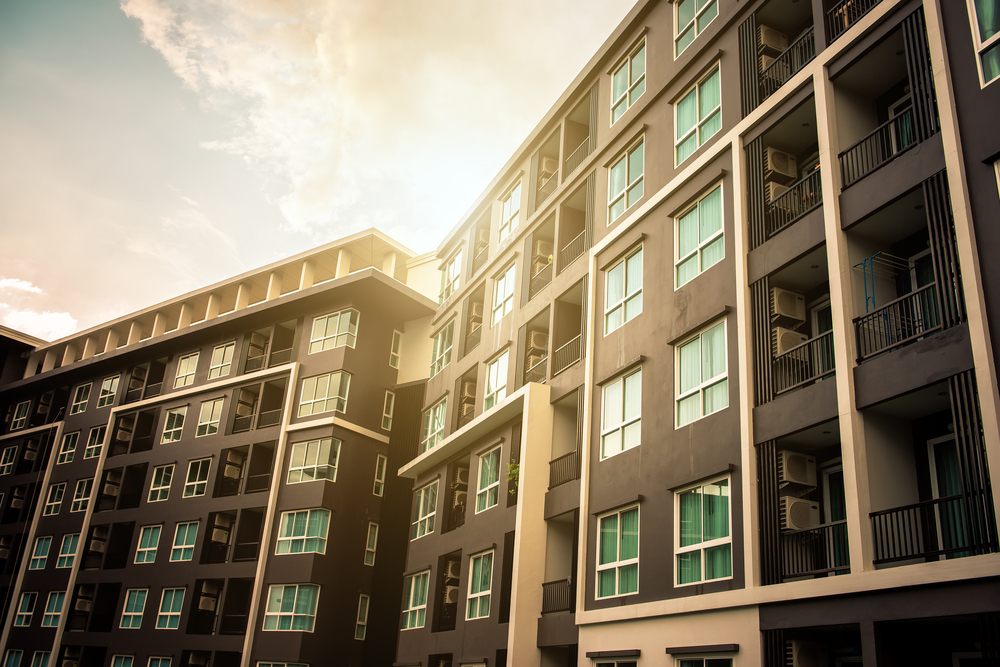
More than 100,000 homes could become “uninhabitable” in high temperatures as the boom in office-to-residential conversions has created heat-trap flats, a major insurer has warned.
More than 100,000 homes could become “uninhabitable” in high temperatures following the boom in office-to-residential conversions, a major insurer has warned.
Analysis by Zurich UK of government planning data found that over the last decade, 103,4211 former commercial buildings have been developed into homes, but many are poorly-equipped for rising temperatures.
It found that there has been a 58% surge in commercial-to-residential conversion applications in just three years, as companies scale back office space.
As the demand for housing stock increases, the UK is facing a growing crisis of converted homes that have not been built sustainably for these fluctuating temperatures.
Already this year, the UK has recorded its hottest May since 1922 with maximum temperatures expected and the hottest June day on record yesterday, with potential for that to be surpassed today.
Zurich warns that many commercial-to-residential conversions are at risk of overheating because office buildings were not designed for 24/7 living.
Some have weaker plumbing and services, particularly where these have had to be fitted retrospectively during conversions.
Poor airflow can also be a problem, with sealed windows and limited ventilation that can trap heat indoors.
Some have large glass façades that amplify heat, lack external shading and older buildings may be made from outdated materials.
Crucially, there is a regulatory gap as conversions typically fall outside of new build housing standards on issues such as overheating.
Central urban locations, where offices are often based, are often hotter.
London is the UK city least-adapted to the hot weather due to the poor ventilation of offices and homes which leads to overheating.
Research by academics at The Grantham Research Institute on Climate Change and the Environment at LSE found half of all UK homes are at risk of overheating, which is projected to increase to 90% of all homes under a 2°C global warming scenario.
While building regulations now address the risk of overheating in new-builds, existing buildings are excluded – despite the UK having one of the oldest and most inefficient building stocks in Europe.
Homes that are not resistant to heatwaves also pose a significant health risk.
The Climate Change Committee estimates that heat-related deaths in the UK will increase by around 250% by the 2050s.
Zurich head of large and complex property claims Megan Dunford says: “These challenges expand well beyond isolated periods of hot weather.
“While global climate patterns such as El Niño may amplify temperatures in the short term, the broader trends point to more prolonged and sustained heat events across the UK.
“Commercial buildings are generally designed to different operating tolerances than residential properties, and sustained temperature variation can place material stress on the building fabric.
“This increases the risk of thermal expansion and contraction, which may contribute to cracking, subsidence, and ultimately escape of water incidents.
“Over time, this not only undermines building safety and durability, but also exposes residents to higher maintenance costs and reduced living standards.”