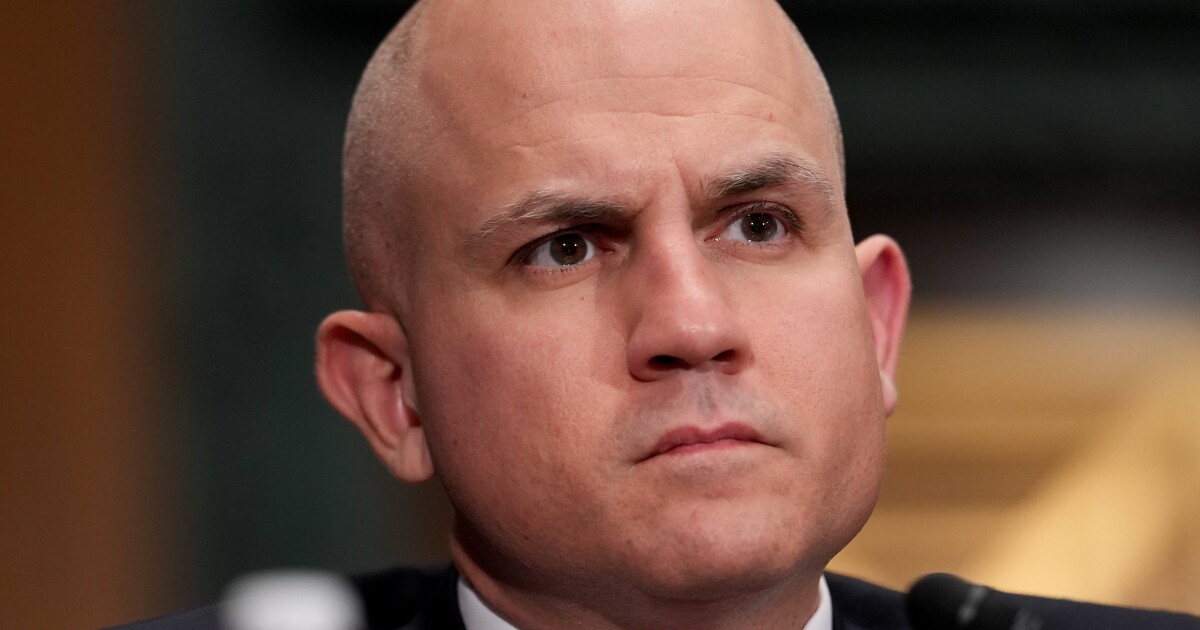
Government securitization guarantor Ginnie Mae is providing mortgage companies with more options for pooling loans as it starts 2026 with a newly confirmed president.
Electronic promissory notes, which
"The expansion of the Digital Collateral program to the PIIT program will promote wider adoption of digital lending by providing increased flexibility to e-issuers,"
Because PITT has a lot of moving parts, authorizing e-notes use in that context suggests comfort with them has grown, said Ted Tozer, former president of Ginnie Mae.
"They're doing a servicing transfer at the time of the pool issuance, which means you have got a lot of coordination that needs to occur with the document custodians and so forth," Tozer said.
Ginnie has seen
Just 22% of lending executives responding to
"There is still a lot of promotion and education needed as I am still getting inquiries whether you can include e-notes along with standard paper notes in the same pool.
Ginnie's digital collateral program has had an upward trajectory since its inception. But lenders have faced some operational obstacles such as the commingling issue, which Ginnie announced it had resolved in 2024, and the PITT exception, said Angel Hernandez, director, housing finance leader at Guidehouse, a professional services and technology consulting firm.
For some lenders that use PITT as a core component of their delivery strategy, the change may make overall e-note use compelling due to potential efficiencies and other benefits. For others that have been using e-notes but had to make exceptions for part of their business, digital collateral use is likely to expand, according to Hernandez.
"As much as the program has grown, not every aggregator is doing e-notes. This is now creating an additional incentive," Hernandez said.
New Platinum pooling options for RPLs, buydowns
Ginnie, which is a government corporation within the Department of Housing and Urban Development, also recently opened up
Custom Ginnie II mortgage-backed securities which have a single issuer and contain level-payment buydown mortgages (C BD pools) can now be combined in C JP Platinum securities with 15-year mortgages or similar C SP pools for 30-year loans.
Ginnie also is making C RG pools containing reperforming loans eligible for inclusion in multiple issuer pools for 30- and 15-year mortgages with level payments, which are respectively labeled M AP and M BP. C RG pools previously only could be commingled with
"They may feel like reperformers and the temporary buydowns are really not that different when it comes to prepayment and because of that they can be included," Tozer speculated. "There's some difference, but it may be viewed as not enough to make them their own little process when it comes to putting together these massive pools."
What having a confirmed president may mean for Ginnie
Now that Gormley is leading Ginnie officially, not just on an acting basis, the government corporation has an advocate who can likely do more to restaff and tackle bigger issues such as industry consolidation and growth in Federal Housing Administration delinquencies, Tozer said.
The leadership of Ginnie's Office of Capital Markets, which is responsible for the Platinum program and other securities, was still listed as vacant at deadline. Ginnie did not immediately respond to an inquiry about this. John Getchis retired as the head of that office in April 2025. Leadership roles at four other offices also are listed as TBD.
Ginnie only guarantees securitizations as other entities back loan-level risk, but increased delinquencies such as have been seen in the Federal Housing Administration-insured market could create challenges for it when combined with the consolidation of nonbanks that are less regulated than their depository counterparts.
"Once you get issuers that are so big that you really can't move their servicing, then at that point you have to try to avoid their failure," Tozer said. "You start doing more to make sure that they don't fail, by making sure they get plenty of liquidity and probably capital. You probably need a confirmed president there to be able to go to the HUD Secretary and talk to him about things like, for example, risk-based capital rules or liquidity requirements."
The issue may be one that Ginnie will have to coordinate with the broader Financial Stability Oversight Council on, he added.
Officials responsible for approving acquisitions also will have some responsibility for managing this risk by deciding whether to approve or set certain conditions on any future megadeals like
"The kind of the feedback I've gotten, just in general from the industry, is that this administration believes that they don't want to hold up mergers unless they absolutely have to," Tozer said. "As mergers get announced, and servicing gets more and more concentrated, we'll start seeing how the Trump administration deals with that, if it does at all."