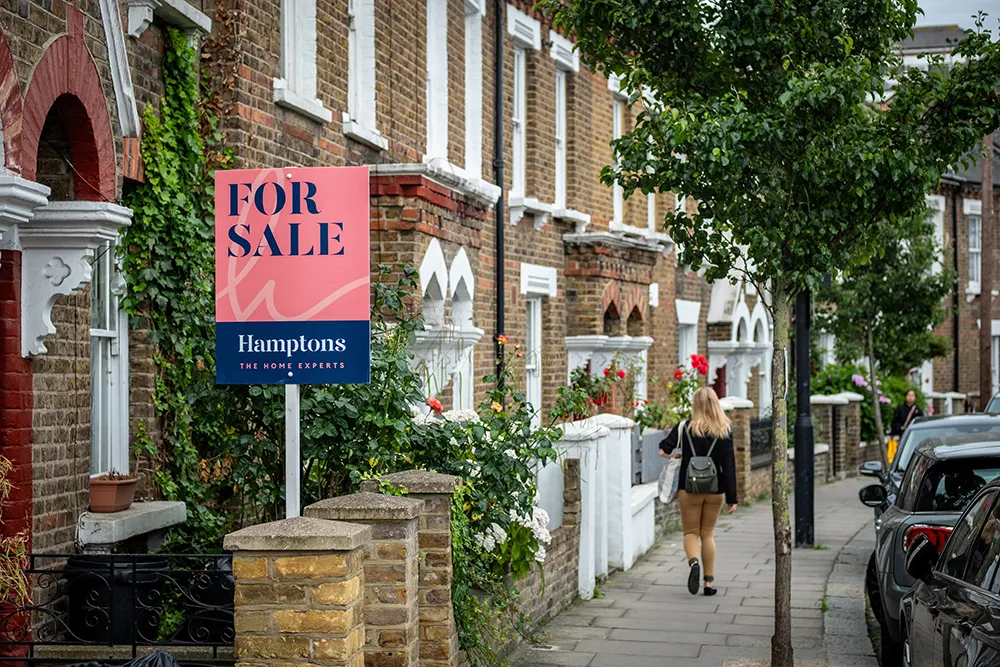
The average asking price dipped by 0.9% to £373,971 over the year to April, although it was 0.8% higher than in March, according to Rightmove.
The property listing portal says the market is showing surprising resilience against soaring mortgage rates and global uncertainty.
Demand from new buyers so far this April was 7% below where it stood at this point last year and has been lagging behind 2025 levels this quarter.
The number of sales agreed is 3% behind last April’s level.
The number of homes that have come to market so far this month is 1% lower than a year ago, but 13% higher than in 2024.
Buyer affordability has improved thanks to average earnings rising by 3.9% year on year and outpacing growth in average asking prices.
A typical mover is also now able to borrow more, due to last year’s review of mortgage lending limits.
The average two‑year fixed rate has risen to 5.42%, from 4.25% before the start of the war, adding a monthly average of around £235 to a typical new mortgage.
Price growth this month has been mainly driven by higher-priced, top-of-the-ladder homes with four or more bedrooms, according to Rightmove.
It says these buyers are typically discretionary movers and cash purchasers.
This means they are less reliant on mortgage borrowing and less sensitive to increased borrowing costs.
But geographically, lower-priced Scotland has seen the strongest increase in asking prices in April, up by 4.3% month on month and by 3.8% year on year.
Lower average asking prices resulting in lower mortgage costs as well as a faster home-buying process are supporting this growth.
Rightmove mortgage expert Matt Smith says:“At the start of the year there was growing optimism that the Bank of England base rate would continue to fall, but that picture has shifted following the conflict in Iran.
“Financial markets are now largely pricing in further base rate increases this year rather than cuts, which has fed through into higher mortgage rates compared with earlier in 2026 and this time last year.
“The initial shock appears to have passed, with mortgage rates stabilising over the past couple of weeks, but they remain elevated.
“The next moves will depend on upcoming UK inflation data and how the Bank of England responds.
“If policy decisions align with current market expectations, a period of relative stability is more likely than meaningful falls.
“Even if external pressures ease, including improved conditions in the Middle East, history suggests mortgage rates are unlikely to come down quickly, meaning higher borrowing costs are set to remain in place for the foreseeable future.”
North London estate agent and former Royal Institution of Chartered Surveyors residential chairman Jeremy Leaf says: “There’s no question war in the Middle East has had an impact on property market activity with hostilities continuing but not as severe as feared.
“Although the Rightmove data reflects asking, rather than achieved, prices, steeper reductions might have been an early warning of tougher times ahead bearing in mind worries over affordability and especially mortgage rates.
“However, in our offices the negative effects have also been relatively limited to date with the overwhelming majority of sales proceeding as well as new listings and buyer enquiries steady.
“But we have been involved in some fairly intense negotiations too with existing as well as new buyers and sellers trying to factor in anticipated increases in costs.”