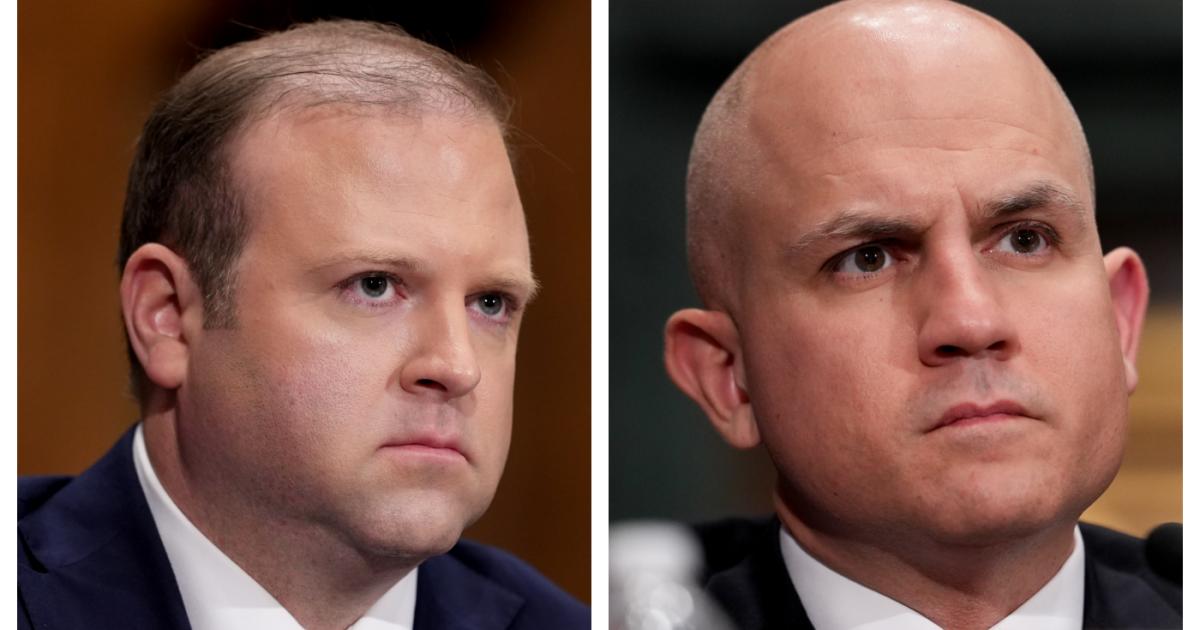
Senate confirmations have officially filled key leadership posts at Department of Housing and Urban Development entities, ending formal vacancies that have taken most of the year to fill.
Now that the two are in place they could play a central role in "addressing concerns over spiraling housing costs" that are "one of Washington's biggest priorities," Scott Olson, executive director of the Community Home Lenders of America said in a statement.
The Senate confirmed Gormley and Cassidy as part of a larger group of nominees with Republicans largely voting in favor and Democrats against. Four did not vote: Sens. Elizabeth Warren, D-Mass; Richard Durbin, D-Ill.; Cory Booker, D-N.J.; and Tina Smith, D-Minn.
During
The confirmations arrived the same day as the FHA resolved wording in its new waterfall of options for distressed borrowers that had raised industry questions about applying partial payments to mortgages in default. The questions pertained to how the date the default occurs gets determined. The FHA issued a waiver for that wording on Thursday.
FHA insurance fund comes into sharper focus
The market has been awaiting the FHA's full annual report on the health of its insurance fund, which appears to have been delayed, possibly due both to a government shutdown in October and the absence of a confirmed commissioner.
US Mortgage Insurers has called for FHA to consider replacing its fund's minimum 2% capital ratio requirement with one more similar to "other loan–level, risk-weighted frameworks in the mortgage finance system" that are stricter. Private MIs compete with the FHA.
USMI welcomed the confirmations of Cassidy, Gormley and Travis Hill, chairman of the Federal Deposit Insurance Corp.'s board of directors, who will play a role in determining bank capital requirements for mortgages.
The group called for Hill "to make prudent updates to bank capital rules that balance access to mortgage credit for loan downpayment homebuyers with a financially stable housing finance system."
FHA and Ginnie's current position in the mortgage market
The FHA and Ginnie Mae play roles in different segments of the government-backed mortgage market serving many first-time homebuyers. While FHA insurances mortgages at the loan level, Ginnie guarantees securitizations that support a key secondary market for home financing.
FHA delinquencies tend to be elevated relative to other parts of the mortgage market because its loans serve many homebuyers with affordability constraints, who may have relatively less of a buffer against financial distress.
Private mortgage insurers work with Fannie Mae and Freddie, two government-sponsored enterprises that have been in conservatorship to help insure borrowers with lower downpayments. Fannie and Freddie buy and back many mainstream mortgages.
The GSEs have proposed goals that call for them to compete less with the administration for new loans going forward.