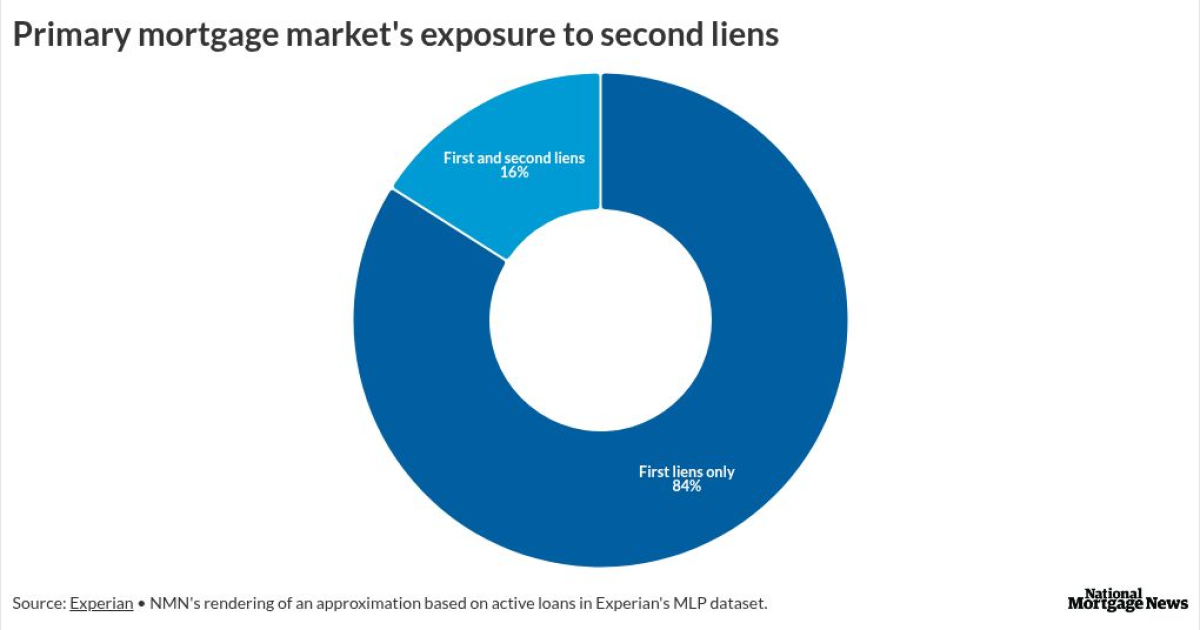
The share of primary mortgages on properties that also have second liens is currently in the double digits, reflecting growth in home equity lending that's increasingly relevant to agency mortgage-backed securities investors.
Approximately 16% of active first liens are on homes that also have seconds on them, representing a total outstanding balance of $522 billion, according to Experian's Mortgage Loan Performance dataset, which tracks loans going as far back as 2005.
The loan-level information could aid investors who otherwise only have had access to information about seconds existing at the time of first-lien origination, according to Michael Pyatski, Perry DeFelice and Angad Paintal, who authored a recent Experian report on the topic.
Second lien information can help MBS investors size up performance risk related to certain
"Borrowers who take on new second liens and then experience negative HPA may be unable to refinance due to re-subordination limits," the report's authors wrote
A broader perspective on lien data
Lien monitoring for individual portfolios has been available, but among the reasons broad information about seconds may have been limited for MBS is because title has been one of the fragmented components of servicing work that tends not to be processed within core systems.
Investors are starting to devote more attention to this type of data primarily because
"There are a lot of standalone-second companies out there. That, I think, is why people are really into the lien-monitoring piece," he said.
Other type of servicing data to watch
More servicing data from component processes may come into focus for investors given recent increases in prepayments and arrears in some parts of the market, Austin said.
The trend has had impacts on both investors and servicers seeking to manage growth in costly distressed-loan processes at a time when the broader industry has
"Inspection work, property preservation, title and curative issues, valuation and equity monitoring, hazard claims processing, and REO timelines are a lot when you're talking about one file. You compound that with the rising delinquencies, what's that going to do to the system? We're trying to help get ahead of that," said Austin.