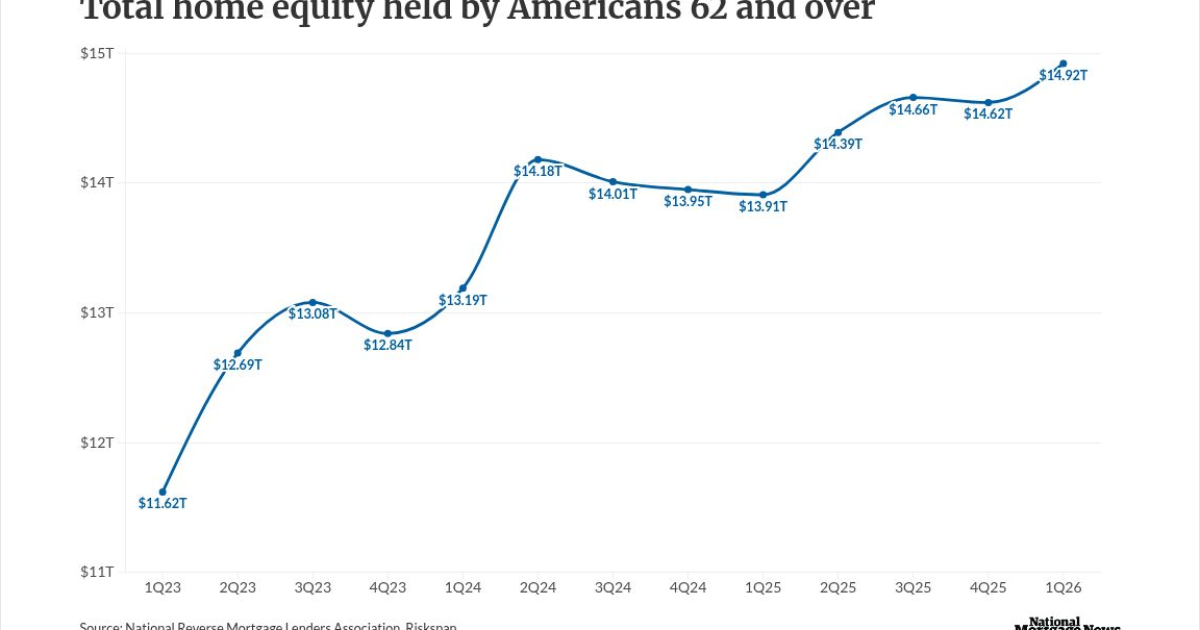
After inching downward late last year, senior home equity reversed course and hit a new record high in early 2026, according to the newest report from Riskspan and the National Reverse Mortgage Lenders Association.
The amount of
Meanwhile, on a year-over-year basis, the latest number jumped more than 7% higher from $13.91 trillion in the first quarter of 2025.
"The rebound in senior housing wealth is encouraging news for older homeowners and underscores the important role home equity continues to play in retirement security," NRMLA President Steve Irwin noted in a press release.
The first quarter's upturn came on the back of a $314.8 billion leap in senior-held property values between January and March. The number reflected 1.8% growth from fourth-quarter 2025 but was offset by a 0.4% rise in senior mortgage debt, representing $10.5 billion.
Higher home equity levels arrived in tandem with drops in mortgage rates in January and February, which briefly bottomed out to
"With senior home equity reaching another record level, many older Americans have greater financial flexibility to help address rising living expenses, healthcare costs or other retirement needs," Irwin said.
Changing needs of older homeowners
The rapid acceleration of senior equity levels, which three years ago stood at just $11.62 trillion, comes as an overwhelming majority of homeowners express a preference for aging in place.
In research conducted by the
The trend is helping to drive
Similarly, a subset of older homeowners are choosing to tap into some of their equity to purchase larger homes, bucking the traditional downsizing trend associated with aging, according to a recent Wall Street Journal article published in mid July. Baby boomers still account for the largest share of home purchases in 2026 at 42%, the National Association of Realtors reported in April.
Reverse lending industry responds
Likewise, specialists in home lending to seniors are responding accordingly, with a surge of new
The rise of such newer mortgages and other senior home equity products already shows signs of disrupting the status quo in reverse lending in 2026. Volumes of proprietary originations outpaced the number coming from the government-backed Home Equity Conversion Mortgage, which was long the dominant product available for seniors to tap into equity.
In the first quarter, proprietary reverse originations nabbed a 52% market share, compared to 48% for HECMs, according to a