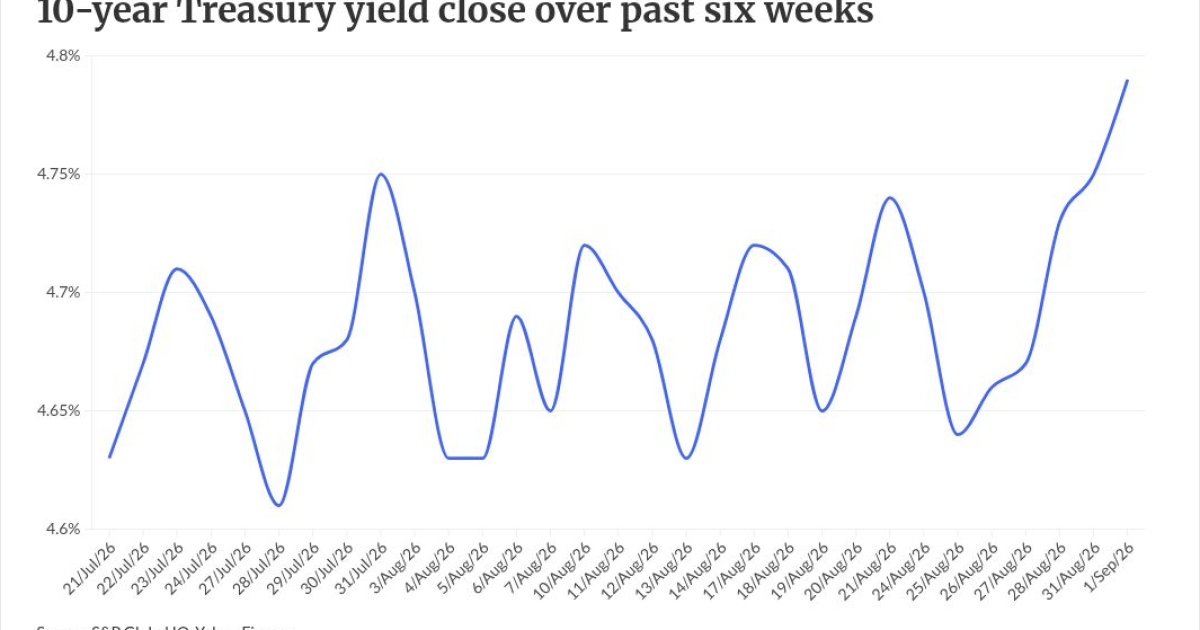
The 10-year Treasury yield, one of the benchmarks used for pricing 30-year fixed rate mortgages, closed just shy of 4.8% on Sept. 1, its highest point since Jan. 14, 2025, according to Yahoo Finance.
The bond market was already unsettled heading into Federal Reserve Chair Kevin Warsh's speech last Friday in Jackson Hole, and his remarks made things worse. For mortgage lenders who at the start of the year were expecting mortgage rates to slip under 6%, the now very familiar refrain of "higher for longer" is what they should expect for the rest of the year, several industry participants warned.
"It could be a really tough winter for a lot of mortgage lenders if rates continue to trend upward," warned Bill Cosgrove, the CEO of Union Home Mortgage. "It's setting up to be very challenging."
The
"It's obviously not helping an already difficult situation, with very few homeowners willing to move," said Michael Bright, who is now CEO of the Structured Finance Association. "What is more concerning is if this is the beginning of a major secular trend toward much higher rates driven by inflation and budget deficits."
What's driving the moves
Mortgage rate movements are directed by forces that can shift
"Developments in the bond market remain central to the direction of mortgage rates, and yields have been volatile as investors weigh heavier issuance and ongoing fiscal dynamics," Hayes said. "Credit markets are also digesting sizable supply from large corporate issuers, especially AI hyperscalers, which can compete for investor demand. With the Fed meeting in mid-September, expectations can evolve materially as new economic data comes in."
"This week's bond market selloff is creating additional headwinds for the mortgage industry," said Jeremy Collett, Rate's chief capital markets officer. "As Treasury yields move toward new cycle highs, mortgage rates are following, which will pressure affordability and likely keep purchase activity constrained heading into the fall."
"What's notable is that this isn't being driven by a single factor," Collett said. "Markets are simultaneously contending with escalating geopolitical risks in the Middle East, rising energy prices, persistent fiscal deficits, and an enormous amount of Treasury and corporate bond supply that investors must absorb."
How the deficit affects mortgage rates
Historical data from Optimal Blue put the conforming 30-year FRM at 7.052% for Jan. 14, which is its most recent high point. The Freddie Mac Primary Mortgage Market Survey for the week of Jan. 16 was at 7.04%, the first and last time rates were over the 7% mark since May 30, 2024.
Depending on the source, today's spreads are narrower. As of Aug. 31, Optimal Blue had the conforming 30-year at 6.719%, up over 6 basis points since Aug. 26 and just above the level reached at the end of July. On Aug. 27,
When it comes to the short-term rates the Federal Open Market Committee does control, the current market probability for a 25 basis point increase in the target rate
How lenders are responding
Of course, the higher rates are also affecting refinance volume, especially for rate and term applications.
"If these levels continue, we're likely to see some prospective buyers reassess their timelines and budgets," said Jeff McGuiness, the president and CEO of Waterstone Mortgage.
"Still, homeownership is a sound long-term investment for many people, and the desire to own a home remains strong for many individuals and families," he added. "Our role as lenders is to help borrowers navigate market changes, understand their options, and identify creative financing solutions tailored to their unique circumstances — so they can move forward with confidence when the time is right."
But this volatility also creates opportunity for the mortgage industry, Collett said.
At the same time, as higher mortgage rates take a toll on volume, "they also reinforce the value of servicing assets and highlight the importance of operational efficiency, product innovation and customer retention strategies," Collett said.
"For now, however, the direction of rates remains heavily dependent on inflation, energy prices, and whether the market can digest the significant amount of debt issuance expected over the coming months," he added.