A majority of homebuilders are reporting a rise in material costs this summer, with smaller businesses likely to feel the impact of higher prices more significantly.
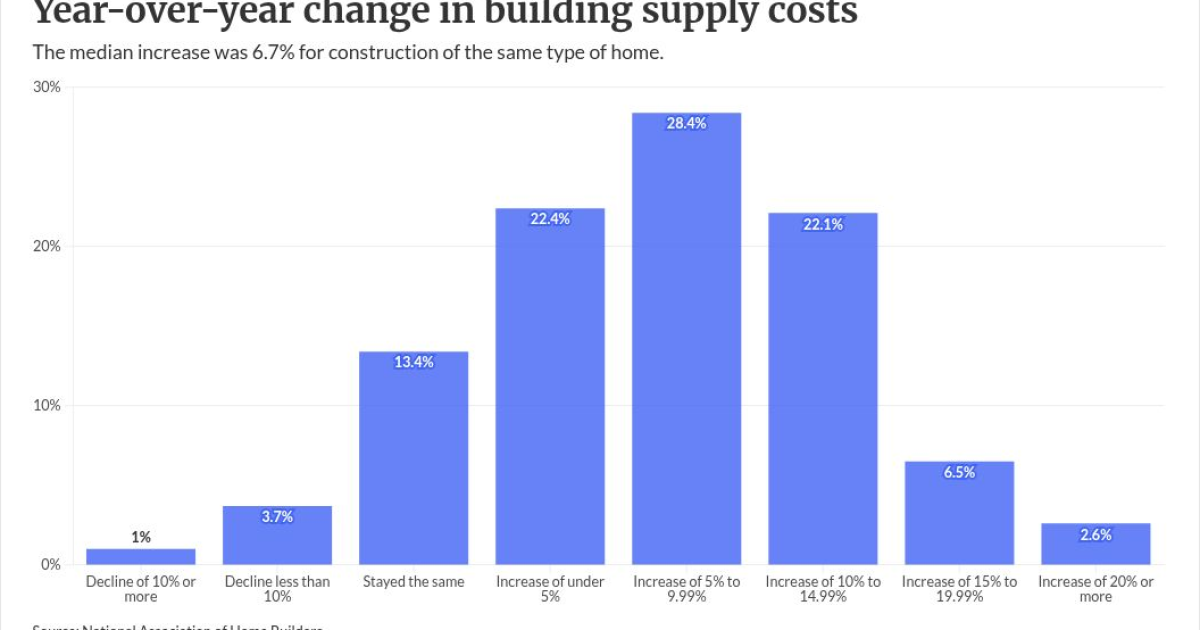
Over 80% of companies surveyed said material prices increased in July compared to the same month a year ago, the National Association of Home Builders noted. The median
"A large majority (72.9%) of the builders responding to the survey reported that their cost of materials for the same house increased by up to 15% over the past year," noted Paul Emrath, NAHB's vice president for survey and housing policy research, in an online post.
Among the majority, 22.4% reported increases of under 5%, while a larger share of 28.4% said costs surged between 5% and 9.99%. Another 22.1% saw material prices accelerating at an even faster pace ranging between 10% and 14.99%.
Another 9.1% share recorded price hikes above 15%, NAHB researchers found.
On the more favorable end for homebuilders, just over 18% of the industry reported material costs either decreasing or staying level on a year-over-year basis when comparing construction of the same property type.
Size matters when dealing with price hikes
Even as the bump in material prices hits profit margins, not all companies are affected the same way, NAHB said. The median annual increase declined consistently based on the size of the builder.
A company with five new home starts or fewer reported a median price increase of 9.1%, compared to the 1.8% rise absorbed by businesses responsible for more than 100 units annually. The latter number is
Companies with six to 24 new starts annually reported a 7.3% surge in material costs, with the rate slowing to 4% among builders beginning construction on 25 to 99 homes.
Multiple factors accounted for the wide disparity, including the largest homebuilders' capacity to stockpile materials in anticipation of higher costs and long-standing positive relationships with suppliers that may allow for negotiated deferred increases.
"Larger builders may also have longer-term contracts with suppliers, locking in current prices for an extended period," Emrath said.
How prices are moving this summer
The 6.7% median hike coming from NAHB's latest survey corresponds to trends from the U.S. Census Bureau's Producer Price Index. In July, the price of goods used for new residential construction, including fuel and energy, increased by that same margin compared to a year ago.
Recent 2026 PPI trends, though, point to flattening activity after early-year energy-price shocks, with costs creeping up only 0.1% between June and July. In June, residential supply costs even declined by 0.8%, as energy prices posted a decrease over the month.
Among construction building materials, softwood lumber posted a notable increase, rising by 7.4% from June to July and 17.3% from the same monthly period a year ago. Meanwhile, ready-mix concrete was down 0.4% in July, with prices climbing by only 2.2% year over year.
Tariff talks causes more uncertainly
Recent announcements from the Trump administration of
Still, any mention of new taxes on imports is unwelcome news for the housing market and an industry already struggling with
"Building material tariffs heighten market uncertainty, strain supply chains and increase construction costs. As the president continues to advance his tariff agenda, NAHB is urging the administration to exempt building materials in light of the ongoing housing affordability crisis," the trade group said in a statement this week.