The Financial Accounting Standards Board
Generally accepted accounting principles in the U.S. do not describe the value of a mortgage servicing right very accurately and have encouraged auditors to allow some lenders to overstate the fair value of these valuable payment intangibles.
The example of PennyMac's
READ MORE:
In both cases, these independent mortgage banks were overvaluing MSRs by significant margins and using these intangibles as collateral for debt. When the publicly claimed levels of recapture were proven by actual experience to be excessive, the markets reacted negatively.
We described the reasons for the near-collapse of UWMC in August ("
"The amendments in this proposed update would (1) increase transparency by aligning the measurement of residential MSRs with how they are priced in the marketplace and (2) improve consistency and comparability across entities by reducing diversity in how servicers consider recapture in their residential MSR valuations," the FASB notice states.
Sadly, the FASB proposal promises a lot, but the actual document is remarkably short on substance. One of the key shortcomings in the FASB MSR proposal is that the document does not define recapture and instead leaves this key point of methodology up to issuers and their audit firms. How does this oversight enhance transparency?
"I think the FASB proposal allows for more manipulation of MSR valuations," one senior banker told NMN. "Recapture can be very subjective unless you need to base it on actual historic performance. I think the FASB rule gives people the opportunity to further cloud the water."
Most lenders who finance MSRs use a simple formula for calculating recapture: Retained fundings divided by total run off. No adjustments. Using this calculus, PennyMac retained less than one third of mortgages that were prepaid in Q4 2025.
In Q4 2025 financial disclosures, PennyMac reported a government first-lien refinance recapture rate of 51% and a conventional first-lien refinance recapture rate of only 17%, a level that was far lower than investors expected. Many IMBs report loan recapture rates in the 70s and 80s by manipulating how they do the calculation, but a one-third recapture rate of prepayments is actually very good.
"At the end of the day, the FASB proposal is going to result in greater concentration in the mortgage business," one veteran of the MSR valuation business tells NMN.
"We have clients that claim to be doing 60% or 75% retention, but the only public data point we have is firms like PennyMac. Lenders have to be very cautious now about what kind of assumptions they put into the model."
The FASB proposal ignores a basic problem in the mortgage industry, which is that the documented experience of some public IMBs is at odds with the valuations assigned to MSRs and blessed by the major audit firms.
IMBs tend to be very aggressive about recapture assumptions with loans purchased in the correspondent channel because prices tend to be quite high. The lender must book the MSR at their costs basis, which today includes a certain amount of recapture.
Without that assumed level of recapture, which is accepted today by auditors, some correspondent lenders might be forced to write down the MSR to true fair value based upon the cash flow of the asset.
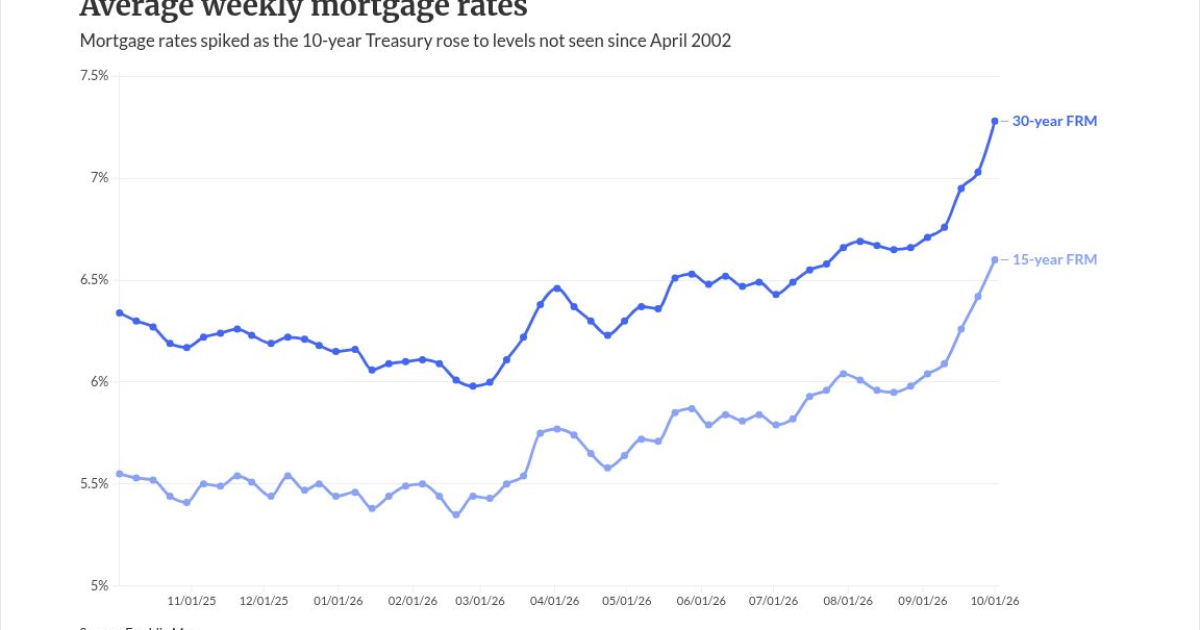
"Recapture continues to play a meaningful and increasingly visible role in MSR pricing, borrower behavior, and portfolio strategy," notes a December 2025 MIAC analysis. "Even as primary mortgage rates hover in the low- to mid-6% range, recapture activity continues at meaningful levels across much of the industry." Yet today mortgage rates are over 7%.
The FASB proposal is supposed to enhance transparency for investors, but the actual document does not require lenders to report the portion of the MSR valuation separate from the accepted method of calculating fair value based upon actual cash flows.
Of note: the profit from a recapture event will still be separate from the MSR. FASB's traditional position is that recapture did not qualify as a financial asset because it requires the MSR holder to perform additional actions rather than generating passive, contractually defined cash flows. This conflicts with the idea of "fair value" defined by FASB, but maybe that is the correct position.
Today, as much as a full multiple of reported MSR valuations are in fact attributable to recapture and other assumptions separate from cash flow analysis. In Q2 2026, looking at public filings, UWMC looks as though it overvalued their MSRs by more than a full multiple at 5.9x annual cash flow vs a cash market value closer to 4.5x.
FASB needs to recognize that explicitly including estimates of recapture in MSR valuations will not make investors pay higher prices for servicing. It also puts FASB at risk of mixing apples with oranges by combining a cash flow based valuation with a completely speculative assumption.
"The public accounting firms are running an MSR ponzi scheme," notes the CEO of one large public mortgage firm. "Meanwhile, if banks take market share as they did in Q2, these IMB MSRs are going to be torn up. Prepayment speed assumptions are already single digits and recapture assumptions are sky high. The assets can't go any higher."
Of course the obvious observation to make is that predicting the future rate of recapture in a mortgage portfolio is impossible, just like predicting the propensity of a residential borrower to prepay a mortgage.
As this writer learned trading mortgages at Bear Stearns years ago, investors who think that they understand how a given loan pool will behave in terms of future prepayments are nearly always wrong.
MSR cash flow spreads are at record levels. With this proposal, FASB is at risk of encouraging the mortgage industry's natural tendency to overstate MSR valuations to increase borrowing capacity, this at a time when lending volumes are falling.
After all, an MSR represents the discounted value of future cash flows that have yet to be received, a decidedly speculative intangible asset the value of which can change dramatically with movements in interest rates. Add to this the fact that banks are aggressively taking share in 1-4 family mortgages for low or no margins and the timing of the FASB proposal could not possibly be worse.