It's been a volatile spring when it comes to mortgage demand for new homes.
Applications for
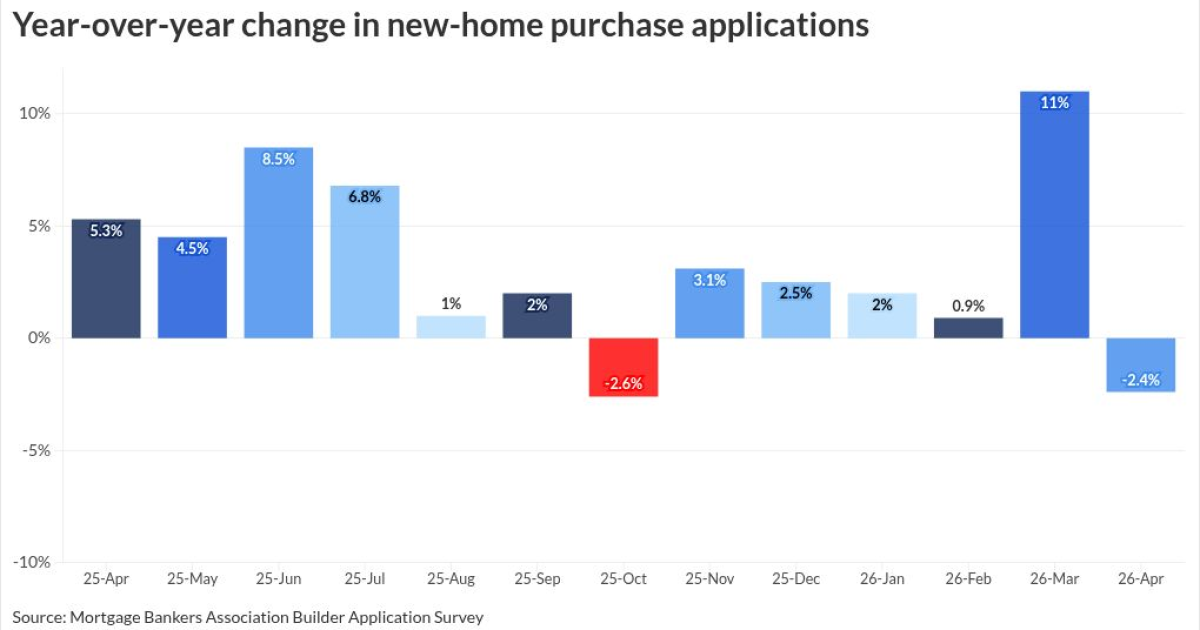
Volume fell 2.4% from last April, and 10% from March, according to the Builder Application Survey. Despite the setback, the MBA expects this type of purchase activity to eventually pick up as fading prices meet rising inventory.
"FHA, VA, and USDA applications accounted for a little over half of all applications in April, as many borrowers continued to rely on government programs to help with affordability," said Joel Kan, the MBA's vice president and deputy chief economist, in a press release.
Prospective home buyers rode a roller coaster of rates in April, as the Iran War and
Wavering interest in new homes
The pace of single-family new home sales was a seasonally adjusted 655,000 in April, down from March's rate of 717,000, according to data drawn from the U.S. Census Bureau. On an unadjusted basis, the MBA estimated 60,000 new home sales in April, also down 13% from March.
Buyers are increasingly seeking affordability via Federal Housing Administration-backed loans, which accounted for 35.7% of new home applications last month. Combined, government loan products edged out the 49.5% of conventional mortgage applications for new builds.
The average loan size for new homes also dipped in April, from $381,938 in March to $378,384 in April, according to the MBA.
Tuesday's figures follow a pessimistic outlook by builders in a recent National Association of Home Builders survey. The trade group's market index, in collaboration with Wells Fargo, rose slightly to 37, but remains muted amid persistent affordability challenges. Sixty-one percent of builders reported using sales incentives, which can include mortgage rate buy downs.
That also comes on the heels of