- Key insight: A new funding structure issued by the Department of Housing and Urban Development would have severely limited grants and excluded most existing fair-housing groups from receiving what remained.
- What's at stake: Judge Myong Joun said HUD's explanation for the changes "falls woefully short" and failed to account for organizations' reliance on federal funding.
- Forward look: The ruling requires HUD to return to its previous grantmaking process, preserving funding for groups that investigate claims of housing discrimination.
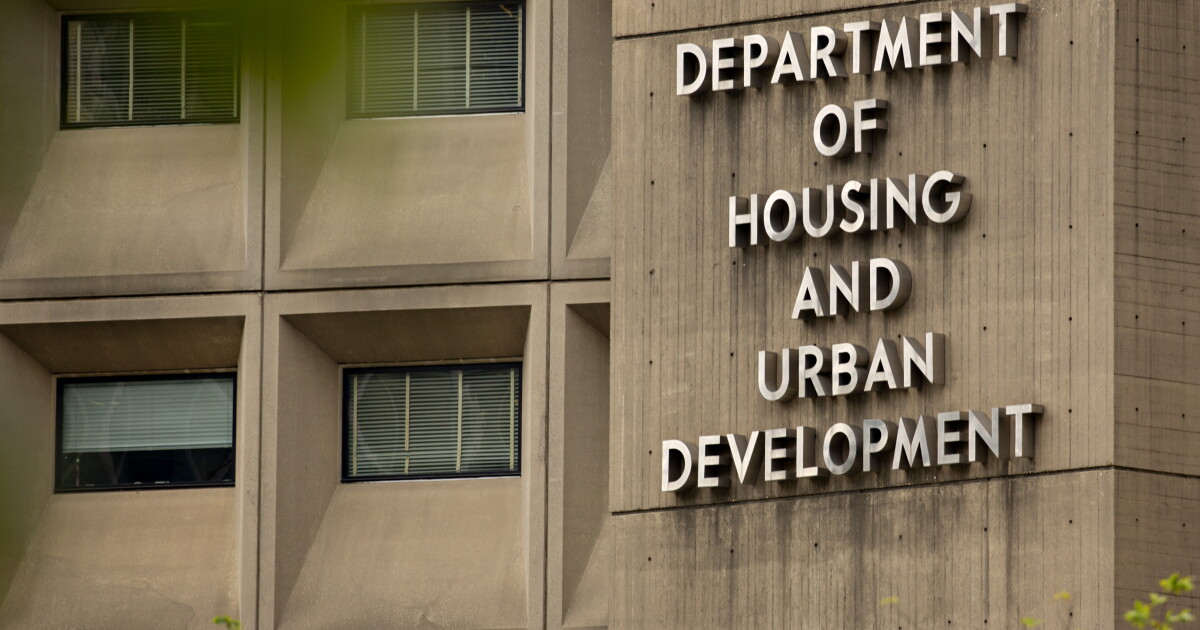
WASHINGTON — A federal judge blocked the Trump administration from overhauling a long-standing Department of Housing and Urban Development program that funds nonprofit groups investigating claims of housing discrimination.
U.S. District Judge Myong Joun of the U.S. District Court for the District of Massachusetts found that the agency failed to adequately explain changes that would have sharply reduced the number of eligible organizations. He ordered that the agency use the structure it used in fiscal 2024 — which is the structure that had been in use for decades — to distribute the money.
The decision comes less than five weeks before the fiscal 2025 funds expire.
In July, the Trump administration announced that HUD would redirect most of the roughly $56 million in congressionally appropriated funding for the Fair Housing Initiatives Program to groups that agree with the Trump administration's views on gender, immigration and religion. The change would have effectively cut most of the existing fair housing programs.
"It belies credulity to think that five awards alone could broaden and strengthen fair housing work across the nation, and excluding almost all existing fair housing organizations will certainly not strengthen fair housing work," the judge said in the order.
Joun said HUD's explanation that the changes were part of a modernization effort to broaden participation and strengthen fair-housing infrastructure didn't withstand scrutiny.
"This pithy description falls woefully short of the mark in both form and substance," he said.
Joun also found that HUD failed to consider the reliance interests of organizations that had built their operations around years of FHIP funding. He cited evidence that at least 50 organizations had completed existing multiyear grants and expected to begin new ones using fiscal 2025 money.
The Massachusetts Fair Housing Center, which has received FHIP funding for nearly 40 years, would have been forced to stop accepting new clients and lay off about half its staff, the judge said. The center generally accepts about five new housing-discrimination cases a week.
The ruling also faulted HUD for imposing new conditions related to gender, immigration and religion. Joun said those restrictions, along with the changes to the grant program, were subject to judicial review and contributed to the plaintiffs' showing of irreparable harm.
The judge said that the plaintiffs were likely to succeed on their claim that HUD's changes were arbitrary and capricious under the Administrative Procedure Act. He said HUD had failed to adequately explain its departure from long-standing funding practices and had not accounted for the consequences for existing recipients.
The attorneys general of a number of Democratic-led states — including California, Massachusetts and Maryland —