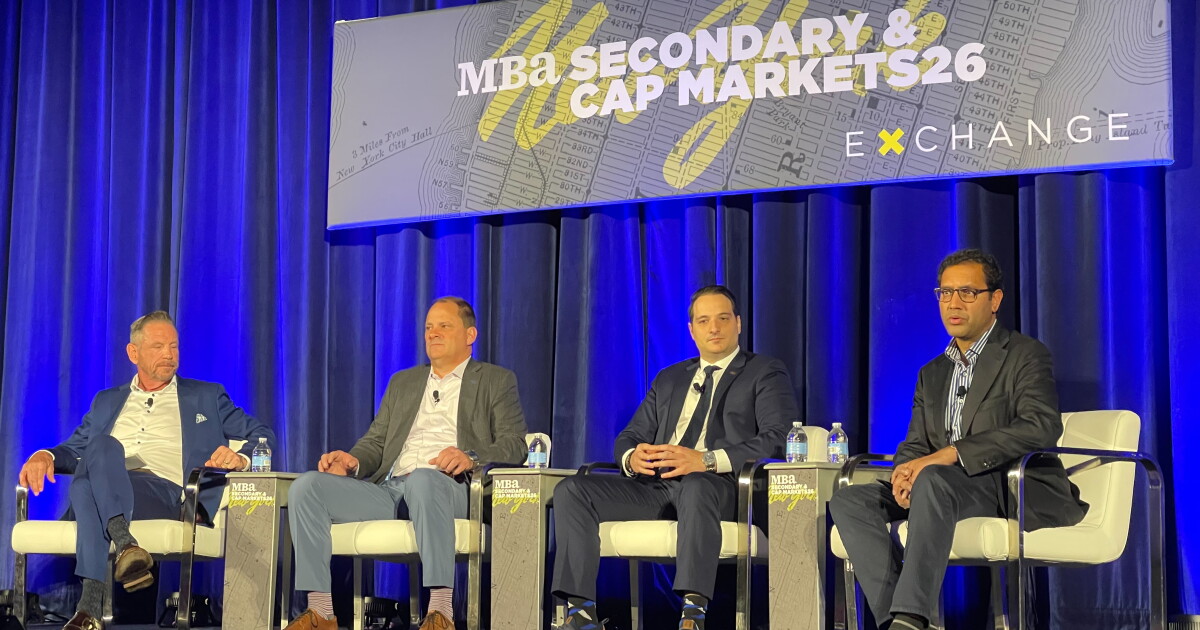
Artificial intelligence could soon upend how secondary market assets are priced and traded, and mortgage technology leaders say the industry may never look the same.
Its abilities are only set to improve just as they are on the originations side of the industry, resulting in a possible reset of asset trading processes as we know them today, they said at the Mortgage Bankers Association
"I can see a world where you have AI surveilling the performance of each investment, each seller's loans, and then coming back with a different pricing for each one of those sellers you're buying from depending on the performance," said Steven Schwalb, managing partner and Co-CEO of non-qualified lending specialist Angel Oak Mortgage Solutions.
"What I'm saying is each seller will have a scorecard, and that pricing that seller receives will be based from that scorecard," he added.
Similar capabilities already
"What you're going to see is this connection of front- and back-end processes and a knowledge base giving more information, and unfortunately, probably even executing the majority of
trades on behalf of your trader," said VanFossen, who also heads the software firm Mortgage Automation Technologies.
The growth of agentic processes within AI, allowing a tool to make autonomous decisions also can help both scale trading possibilities and remove some of the traditional manual analysis at investment firms in choosing how to allocate securitized and whole loans into account markets, Schwalb predicted.
"It just gives us more surety of execution, and actually a better execution, because that will run 24/7," he said.
AI as the new internet
While the disruption presented by artificial intelligence represents a dramatic departure from established norms across all mortgage operations, the industry will still need humans present in the process for any signoff and denials, the leaders cautioned.
The technology, though, opens the door for lenders to uncover solutions for the highly complex transactions that they currently struggle to originate. The benefit will come only if AI has the opportunity to learn and improve its analysis of existing use cases. "I think the only way you get there is reps," VanFossen said.
Although AI already sees steady uptake and growing
While a majority of mortgage company employees predicted new technology developments would result in noticeable changes of existing processes involving
Yet the extent of AI's potential to change the way home lending professionals work is already enormous, given consumers' growing
"I think the industry may have survived the internet, may have survived the mobile phone, but I think it will likely not survive in its existing form with AI," he said.
The simple-to-use features of AI agents and their direct responses appeal to consumers specifically because of the uncomplicated format in which they appear. Consumers don't want the burden of seeing many choices they may find in a typical online search, Garg argued.
"These AI agents — they say 'Here are your choices, and I can do it all for you,'" he said. "They're trying to make money from doing the transaction for you, fundamentally replacing the bulk of the rest of the internet for you."
While state and federal regulations will still protect the mortgage borrower, the rise of AI agents is "going to come from almost every other part of the value chain in and around us," he concluded.