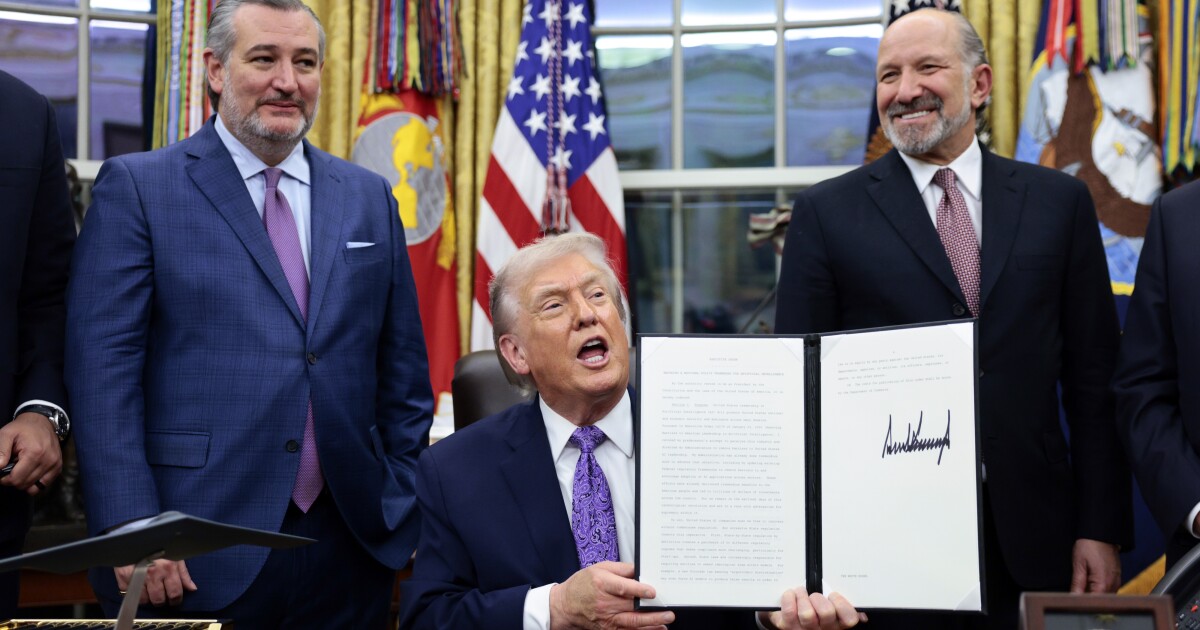
Mortgage stakeholders are applauding President Trump's latest executive order seeking to curb state-level regulation around artificial intelligence.
The Trump Administration will target state laws and challenge them in court, and withhold certain grant funding for states with AI laws it deems onerous, according to
The EO also claims those laws are requiring companies to embed ideological bias within their models, specifically referring to a Colorado statute banning "algorithmic discrimination." The mortgage industry has contested accusations of
The Mortgage Bankers Association praised the order Friday, and said it will work with lawmakers on a clear federal framework for AI use.
"Technology does not stop at a state border," said MBA President and CEO Bob Broeksmit in a press release. "We believe strongly that a unified federal approach is necessary to avoid a confusing patchwork of state laws and regulations that would stifle innovation and raise compliance and borrower costs."
The Community Home Lenders of America lauded Trump's move, and noted how it advocated this summer for a federal 10-year moratorium on state laws limiting the use of AI.
"Individual mortgage banks are already gaining efficiencies through the use of AI — and avoiding a patchwork of 50 different state laws is crucial to those efforts," said CHLA Executive Director Scott Olson in a statement Friday.
What did President Trump say?
The executive order doesn't impose any immediate, outright ban on state AI laws but suggests swift actions. Trump directed his administration to work with Congress to develop a "minimally burdensome national standard" rather than 50 state laws.
Feds were given 30 days to create an AI Litigation Task Force, and 90 days to publish an evaluation of existing state laws the Administration deems onerous. The government will also withhold from states employing certain AI laws funding from various discretionary grant programs.
A federal AI framework won't interfere with certain state laws relating to child safety, data center infrastructure and other undefined topics.
What it could mean for mortgage lenders
Industry players have already
Leaders like the Mortgage Industry Standards Maintenance Organization have
Freddie Mac also addressed AI this week in