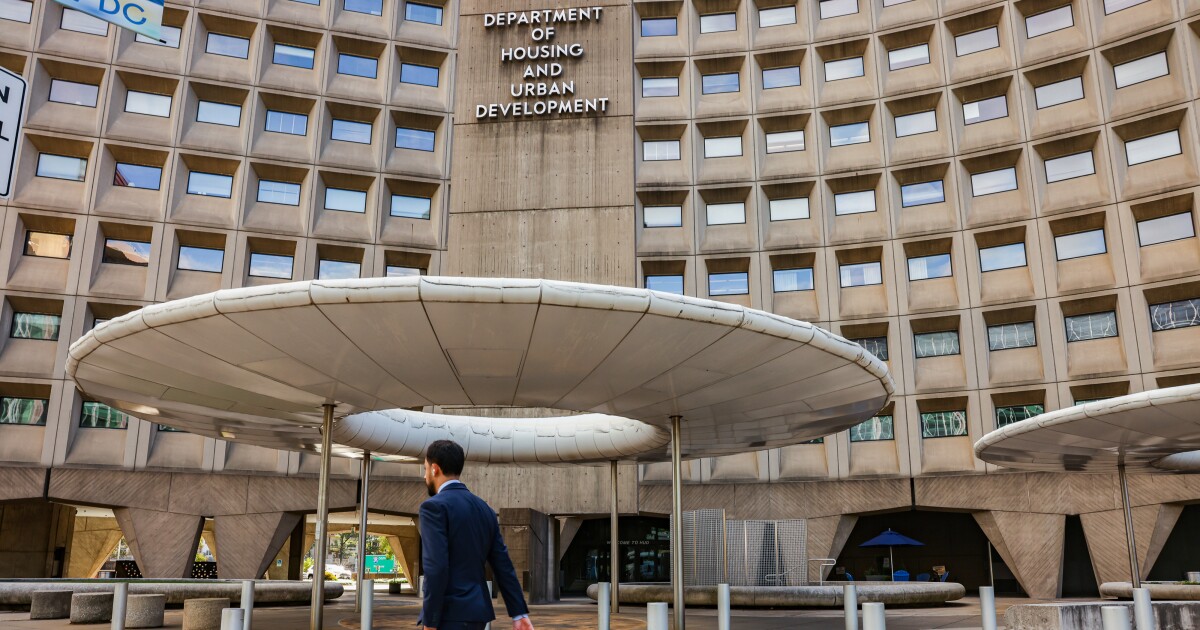
The Department of Housing and Urban Development will be selling thousands more reverse mortgages that have been called due-and-payable on occupied homes, continuing a practice that began late last year.
More than 2,500 nonvacant loans with a total principal balance around $730 million are going up for sale on Feb. 10. Until recently, department's HECM sales more typically involved vacant properties. Falcon Asset Sales is managing next month's offering.
The current sale follows a request for input on the future of the reverse mortgage program, which HUD noted has served over 1 million people but had to overcome some financial and operational challenges to do it.
The
HECM performance and sales price execution
A little over half or 533,894 of the roughly 1 million HECMs the administration has insured have been completed, with two-thirds ending without a claim, according to department analysis of the program that the American Institute of Servicing and Legal Executives cited in an RFI response.
Sales have reduced losses to the MMI fund when compared with traditional conveyance or real-estate owned transactions but
Properties with traditional mortgages sold through the CWCOT process in November had an average 77% price execution relative to broker price opinion estimates or 85% for vacant homes and 74% for occupied ones, the institute found.
The comparative number for 1,180 nonvacant HECMs sold in December was 62%, according to an analysis
Nonvacant reverse mortgages and heirs
The loans HUD has been selling through its non-vacant sales involve situations where the borrowers and any nonborrowing spouses have passed away. Heirs did not officially declare during the allowable period for this but may be living in the properties.
These heirs are not responsible for HECM debt. However, if they missed the allowable period to declare and are occupying the home, they can end up in a foreclosure situation with eviction proceedings and lose rights.
Declaring during the allowable period is designed to give heirs the option to satisfy the loan and live in the property, agree to a sale in which they receive proceeds if there are any remaining after the loan is satisfied or walk away. The declaration period is 30 days with extensions of up to a year in certain circumstances.
Some respondents to the RFI suggested reform to procedures for heirs.
One commenter who reviewed Consumer Financial Protection Bureau HECM complaints found several mentioned "fees and processing timelines that are too fast after foreclosure and/or death of the family members."
The payment process generated the more frequent type of HECM-specific reverse mortgage complaints in the last 10 years, with 21 recorded during that period, followed by concerns about struggles related to paying the loan at 17.
The reverse mortgages FHA insures were designed to allow borrowers age 62 and up to withdraw funds from a home while still living in it. Current rules require them to maintain the property related financial obligations. They must occupy the house for at least half of the year.