President Trump has issued an executive order aimed at stopping federal agencies from taking any actions to facilitate an institutional player's acquisition of any single-family house an individual owner-occupant could purchase.
The follow up to
Notably, the order leaves open the definition of a large investor for now, directing Treasury Secretary Scott Bessent and Kevin Hassett, assistant to the president for economic policy, to draw up one in 30 days. It also has carve-outs that include communities of build-to-rent housing.
"My administration will take decisive action to stop Wall Street from treating America's neighborhoods like a trading floor and empower American families to own their homes," the executive order says.
This will include having the US Attorney General and Federal Trade Commission engage in closer antitrust oversight of large investors with a focus on whether they are restricting competition or engaging in "coordinated vacancy and pricing strategies" affecting rentals.
Implications for agencies in the mortgage market
The order specifically directs housing agencies or entities that oversee them to no longer approve, insure, guarantee, securitize or otherwise facilitate large investor purchases of homes a consumer could buy to the extent the law allows.
Federal Housing Finance Agency Director Bill Pulte, and the secretaries of departments responsible for housing, veterans and agriculture have 60 days to issue guidance to this end and programs that give consumers preference in distressed mortgage-related sales.
The Trump administration initially dismantled some of these programs previously set up during the Biden presidency, including
Fannie Mae and Freddie Mac, which are two FHFA-supervised quasi-public entities held in government conservatorship, HUD and the Department of Veteran Affairs, are responsible for backing a large share of securitized mortgages that private lenders fund in the US market.
Other ideas the Trump administration has pursued with the aim of improving consumer housing access include getting Fannie and Freddie's to buy $200 billion of their own bonds to
Ramifications for single-family rental firms
Two factors ease some concerns for certain public companies, according to a Keefe, Bruyette & Woods report: the Trump order's inclusion of a build-to-rent carveout and the fact that there was a preexisting retreat from buying through multiple listing services in the single-family investment sector.
"Because the executive order focuses on homes 'that could otherwise be purchased by families,' the shift toward purpose-built rental communities leaves a core growth channel intact," KBW's Jade Rahmani, Bose George, Ryan Tomasello and Jason Sabshon wrote.
While single-family rental real-estate investment trusts have been buying a diminishing number of homes from multiple listing services, they may have to make some adjustments to their strategy and engage in selective liquidations, according to the analysts.
The report reaffirms industry data showing that the international investor SFR share is a small percentage of the market, noting that the combination of publicly traded firms Invitation Homes and American Homes 4 Rent and private company Progress Residential is 0.2%.
While the national share of institutional purchases is small it is "much higher in boomtown markets like Charlotte, like Atlanta, like Huntsville, Alabama,"
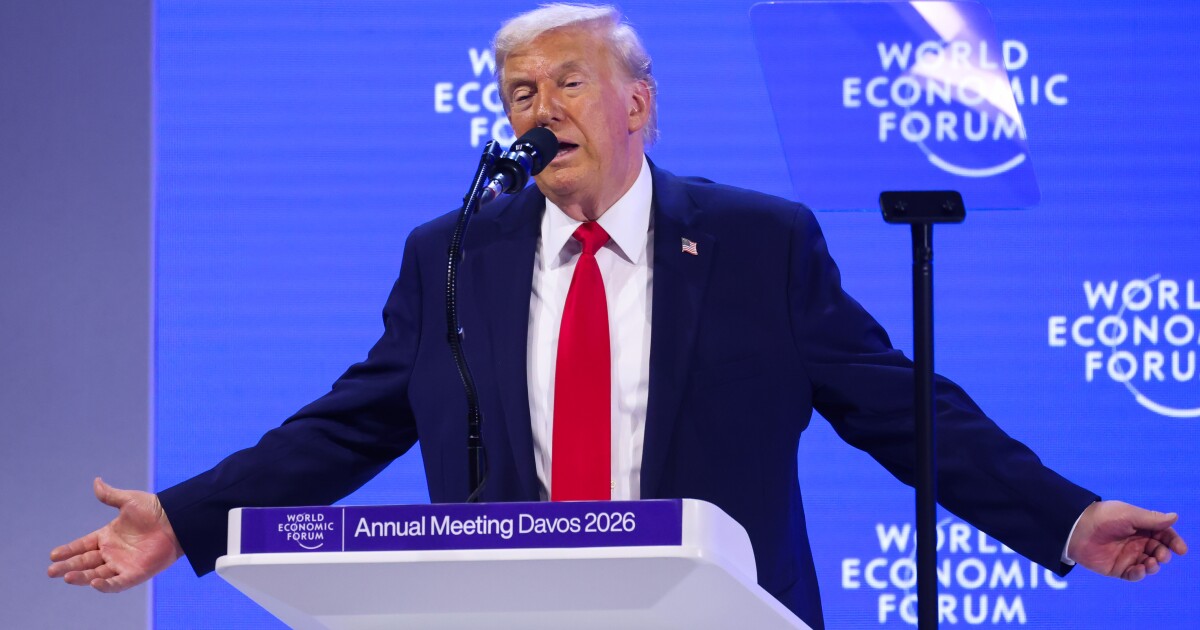
"Many of you are here. Many of you are good friends of mine. Many of you are supporters. Sorry to do this," Trump said during his speech at Davos, according to Bloomberg. "I'm so sorry, but you've driven up housing prices by purchasing hundreds of single-family homes."
"America will not become a nation of renters. We're not going to do that," he added.