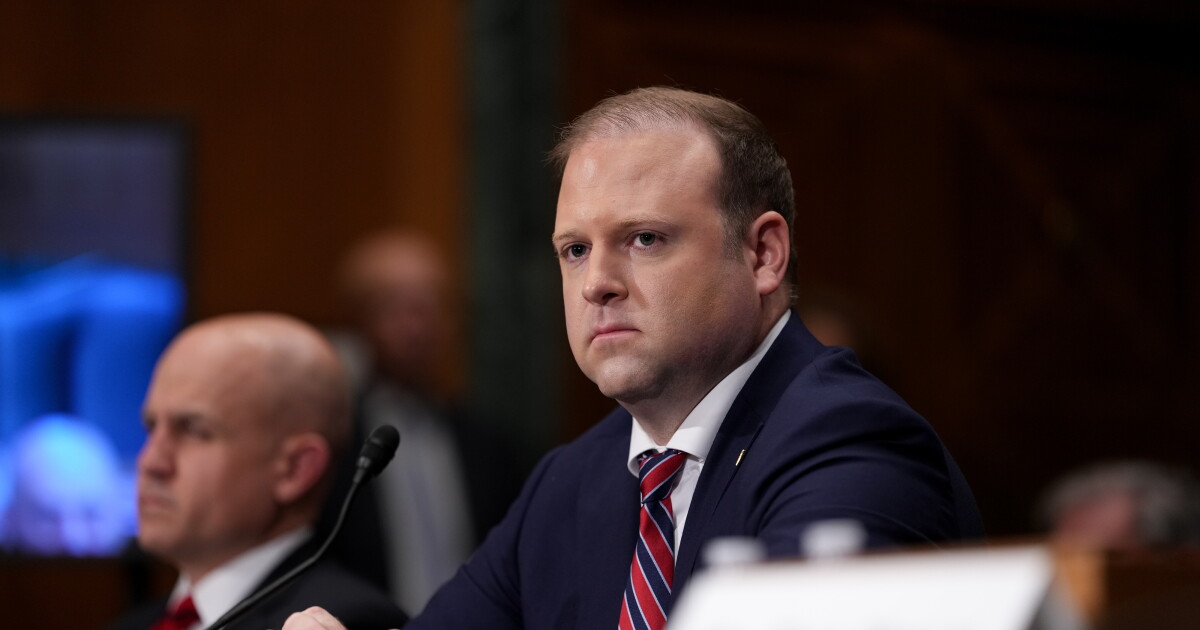
Former Federal Housing Administration Commissioner Frank Cassidy identifies a multifamily premium cut as being among his accomplishments while in the post he recently departed, which raises the question as to whether he thinks a new, similar move is in order for single-family.
"What I'll say is the FHA insurance fund is the strongest it's ever been," Cassidy said when asked about this in a parting interview looking back on his time at the agency he
While a strong insurance fund argues for a further single-family reduction, the previous cut's potential future impact on the fund will likely need to be considered, he added.
"Insurance premiums were lowered in the last administration, so a lot of the business that was done at the higher rate is now burning off. However, we are at almost six times the statutory minimum, so it's definitely something to look at," Cassidy said.
Cassidy reduced varying multifamily premiums that could go as high as 95 basis points to the statutory minimum of 25 bps across the board, removing requirements for distinctions like energy-efficient property certifications with the aim of adding efficiencies.
While Cassidy's previous work was more aligned with income producing properties he said he gained a broader perspective on the housing market while at FHA, where single-family makes up the lion's share of the total portfolio.
"That's where a lot of the priority and the focus is, but it also has a significant multifamily and healthcare portfolio as well," Cassidy said.
On the single-family side, one cost saver for FHA that could help boost the fund's capital ratio over time is the change in the "waterfall" of procedures for distressed borrowers that removes pandemic leniency and expense associated with repetitive partial claims, Cassidy said.
"COVID has been gone for years, so we officially turned the page," he said.
Other views on housing policy
When it comes to his overall view of housing, Cassidy said he aligns with the Trump administration's view that current challenges are primarily a supply-side issue best addressed by deregulation. He added that he worked to implement that in his policymaking while at FHA.
"I was really focused on peeling back a lot of red tape and just getting back to the mission of supporting homeownership and the private sector in terms of bringing more housing online," he said.
Promising ways to bring lower-cost single-family housing into the market include boosting the factory-built segment, he said.
Cassidy supports
He also backs measures that would address challenges around scale that can discourage lenders from making smaller loans to finance housing made at price more affordable to consumers, such as a recent executive order.
Cassidy noted that he bought a property with an FHA loan and the support of rent-paying roommates in his 20s and has promoted more proactive financial education around the strategy that might help lower the age of the average homebuyer, which has been moving higher.
"I was passionate about using the power of the FHA's platform to try to lower that," he said.
Cassidy said FHA's plan for formally adding modernized and competitive credit scores based on payment records that includes rental histories may support that aim.
"People who had been making their rent payments on time for years, they go to get a mortgage, and they pull their credit, and there's no credit score. So I was excited about that," he said.
Career transition details
"I'm returning to the private sector, commercial mortgage banking world that I come from. We'll be able to announce the firm that I'm going to in short order," Cassidy said.
The position will build on his past experience with multifamily and healthcare financing, including related work done with longtime staff members at FHA, such as reducing delays in the 232 program for nursing homes and assisted living facilities by fast-tracking lower-risk transactions.
"We had deals that were closing in 70 days when it used to take six and nine months. I was really proud of that achievement," he said, noting that this made FHA's processing speed more comparable with private and government-sponsored enterprise counterparts.
While Cassidy enjoyed such work, he said the commute weighed on him and
"That's another reason why I decided it was time for me to move on," he said.
However, Cassidy said he understood the need to change and improve the office location based on some issues with HUD's longtime headquarters.
"The building was in a great location but in a horrible financial and physical state. We really needed to move. Some people called it 10 floors of basement. So it's a huge win that we were able to relocate the headquarters to a Class A building," he said.