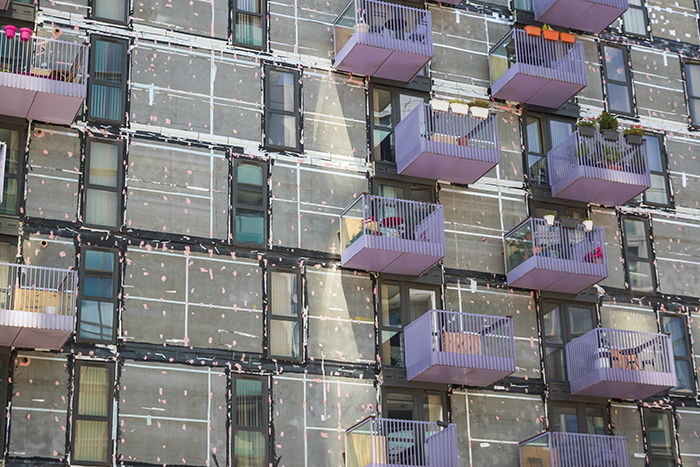
The government said it is cracking down on those responsible for unsafe building cladding, with the Remediation of Unsafe Cladding Bill introduced to Parliament this week.
The bill has multiple objectives, including bringing in a legal duty on those responsible for the safety of their buildings, such as freeholders, to identify and fix issues without delay.
The bill was introduced on 14 October 2026. The new bill is meant to build on the government’s Remediation Acceleration Plan, which the state says helped 470 more buildings complete upgrade works on unsafe cladding.
In addition, the bill will introduce a stronger enforcement framework to sanction anyone that does not comply with a Remediation Order, which would let the First-tier Tribunal hand down financial penalties of up to £500,000.
The expectation remains that by the end of 2029, every building over 11 metres with unsafe cladding should either have been remediated or have a clear date for completion – the key change being that tougher powers will become available before this.
As a safety net, third parties, such as Homes England or local authorities, will be able to step in and carry out remediation if those responsible continuously fail to act – reassuring residents that works will go ahead.
Additionally, if a building ends up with no effective owner or responsible entity, leaseholders will have clearer legal routes to take control of the building’s management so essential maintenance and safety works can continue.
Developers, contractors and others who have paid to make buildings safe will have a simpler and more effective route to pursue cladding manufacturers to recover remediation costs, where their products have contributed to a building being unsafe – unblocking technical legal barriers that have too often stood in the way.
A new register of all medium rise residential buildings in England will help ensure no building falls through the net. Failure to register could result in civil penalties of up to £7,000 with higher financial penalties of up to £40,000 or prosecution available.
The bill is expected to accelerate remediation for around 12,000 residents.
Building safety minister Baroness Blake said: “It’s unacceptable that so many people have been left living in homes with dangerous cladding, anxiously waiting for those responsible to take action.
“This bill is a milestone in our mission to right these wrongs and ensure everyone feels confident in the safety of their home.
“Crucially, it will ensure all residents have a route to remediation, regulators have the powers they need to take action and that for all residents currently waiting, an end is in sight.”
Rae Ahmed, senior associate at Norton Rose Fulbright, said: “The Building Safety (Remediation of Unsafe Cladding etc.) Bill represents a significant development in the building safety landscape, building on the framework established by the Building Safety Act 2022. Developers, building owners and other responsible parties face a regime with clearer duties and enhanced enforcement powers aimed at ensuring unsafe buildings are identified and remediated promptly.
“For the wider market, increased clarity and accountability are likely to be welcomed. However, the effectiveness of the reforms will ultimately depend on how efficiently the new regime is implemented and enforced. Those with potential remediation exposure should be reviewing their position now rather than waiting for regulatory intervention.”