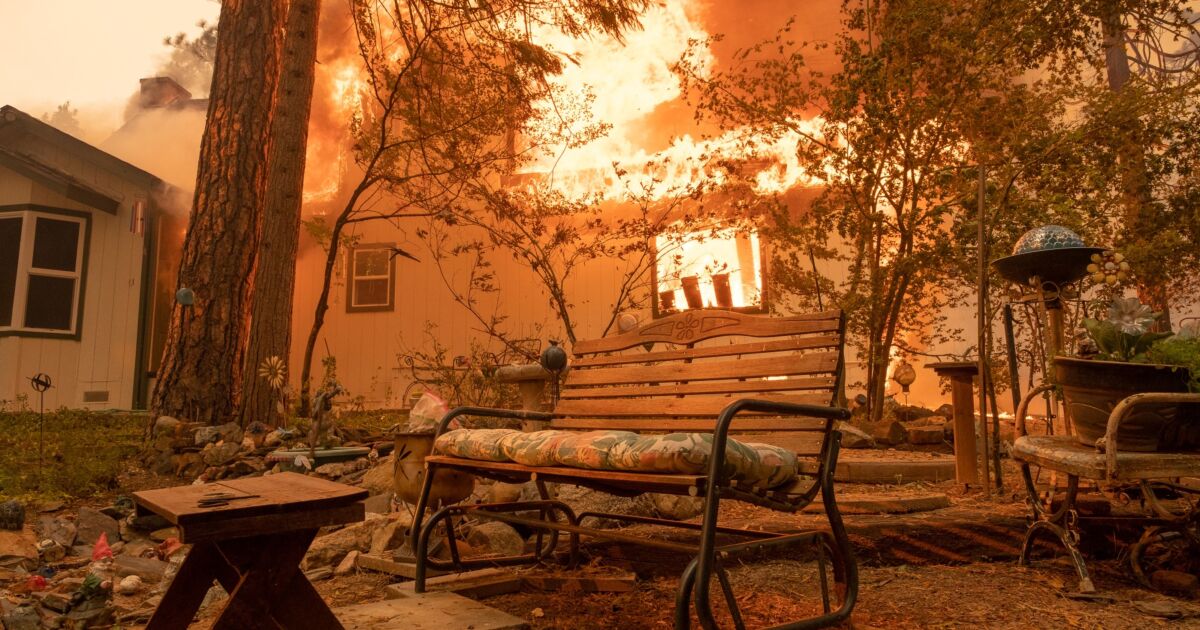
A new Nevada law set to go into effect will permit insurance providers to exclude wildfire damage in homeowners policies in 2026.
Legislation passed in the Silver State this spring means insurers receive explicit legal protection if they opt out of wildfire coverage
The new law serves as a four-year sandbox, or pilot program, to allow insurers to test changes, and was passed on a wide bipartisan basis before its signing by Nevada Gov. Joe Lombardo in June. The rule neither mandates the removal nor separation of wildfire coverage for insurance companies operating in the state.
The option to segment out coverage for wildfires, though, resembles moves previously introduced in other states, which already offer standalone policies that address the costly and severe threats they face from specific types of natural disasters. In California, earthquake damage is excluded from homeowners insurance, while standalone coverage in Texas and Florida exists for windstorms and hurricanes.
How the change might affect the mortgage industry
Properties financed by conventional mortgages sold to the government-sponsored enterprises require homeowners to obtain insurance coverage.
Nevada's move underscores the affordability pressures facing homeowners in some communities, according to supporters of the new legislation. The option to eliminate wildfire protections would alleviate some of the causes behind rising insurance premiums and remove the threat of nonrenewal or
Unlike
But California regulations also spell out the minimum fire coverage insurers must include, making similar selective removal of wildfire damage illegal without legislative approval in the Golden State.
How wildfires have changed the Southern California market
Nevada's updated regulation will go into effect almost one year after the first
Reflecting the potential extent and long-term effects of wildfire damage, close to 40% of land in some of the worst-hit areas during last January's catastrophic events are being sold to real estate investors, according to a new Redfin report.
The rate of investor purchases comes even as the
"People who plan to stay are encouraging others not to sell because of how much it could change the neighborhood — but for some residents, selling is the only option that makes financial sense," said Sylva Khayalian in a press release.
In the Pacific Palisades, Altadena and Malibu communities, the number of listings for both vacant lots and homes currently far outnumber sales transactions, she added.
"There are so many lots sitting on the market that sellers are starting to cut prices to attract offers," Khayalian continued, while also emphasizing the cost of insurance premiums has surged between 35% and 50% in affected areas since the infernos.
A total of 19,605 homes representing approximately $46 billion in residential housing value were contained in just two of the fire zones alone, according to a separate Zillow estimate. In fire-stricken areas of Pacific Palisades and Altadena, the median value of properties stood at $1.95 million at the end of last year.