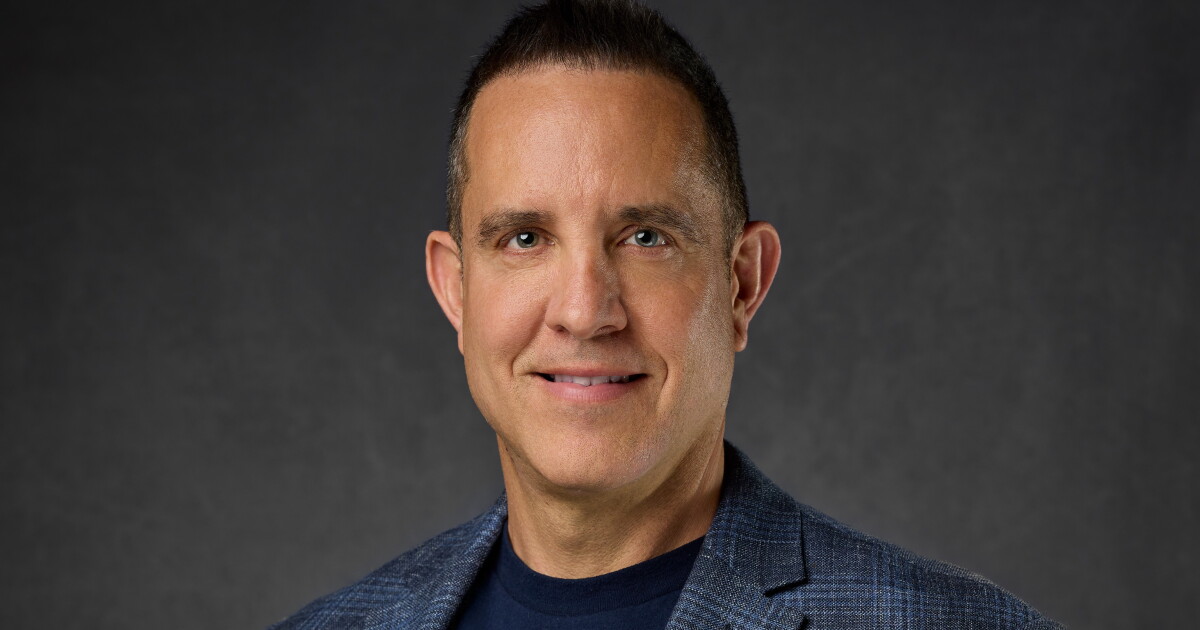
AnnieMac Home Mortgage CEO Joe Panebianco started his career on Wall Street, and while he didn't stay there long, he says it has played a key role in shaping how he leads his company.
So too has his subsequent work at the helm of
In recent conversations with this publication, Panebianco shared how his experience has shaped his distinctive style managing a distributed retail-focused lender and its private equity affiliate.
Edited and condensed excerpts of his remarks follow.
Wall Street's influence
PANEBIANCO: I started as a bond trader and portfolio manager for an investment company in New York City. I specialized in mortgage- and asset-backed securities, but we also traded in everything from Treasuries to investment-grade corporate bonds.
I had a friend whose father worked in the mortgage business at the time. His company was originating mortgages, and in the old days, you did not just sell loans regularly, you held on to these loans for sometimes up to three months, and then you did a quarterly securitization. He asked me for some advice in terms of how to properly manage that process.
This got me interested and involved in the mortgage space. My job became helping him manage his pipeline in addition to looking at the component parts of his company and valuing them.
I wasn't there for very long before I decided to go off on my own. At first I was going to go back to Wall Street, but I decided to give the mortgage industry a shot.
What I loved about the mortgage industry was that you could set longer-term goals than on Wall Street and accomplish them. I'd never worked in an industry before that was more like a team sport than a business. I liked how you could work collaboratively.
It has been something for me to navigate through 2007-2010; 2018-2019, Covid, and the period after the pandemic in 2022. Because of those years, I got experience with a broad continuum of scenarios that could possibly happen.
We hope for the best case, but manage to the worst case, and my background as a financial analyst and a bond trader helps with that.
It also really taught me to really focus on the things you can control. You can't control wars, you can't control
I've learned that a big part of being a CEO involves managing risk. I'm constantly looking at investment compared to returns and the risk associated with those returns.
When you take a look at the industry from that perspective, you're able to say no to the shiny object, yes to the thing that might not be so shiny, and have the patience to know that this industry is much more a function of having consistent returns over the course of years than trying to be something you're not.
A lot of companies, if you ask them what their goals are, they're going to give you a volume number but that depends on whether the interest rate scenario is say, 8% or 3%, which are two very different scenarios.
Instead, I sit down with every single branch, regional, divisional manager, and I find out what their goals are. We negotiate with each branch manager and ask them what they want to do. We come up with a realistic goal and talk about the resources needed to reach it.
We do that across the entire platform and aggregate goals. It gets back to my upbringing as a risk manager. Understanding everyone's goals is a risk-reducing function.
My overall goal is typically a market share goal, not a volume goal. When you have a volume goal, what that means is simply getting as many warm bodies as possible into your organization to hit it. There are some great companies that have had tremendous success doing that, but I never really did it. I'm a long-term thinker and not everyone is. Time will tell whether or not that works.
My expectation is that over a 20-year period, at some point we are going to outperform our peers simply because we take a risk-adjusted, slower moving approach designed specifically to understand what our referral partners and our sales teams actually need.
Helping borrowers compete with cash buyers
PANEBIANCO: An example of how we do things differently is we had an opportunity years ago to put our name on a stadium in Philadelphia. Wells Fargo was leaving. A lot of companies do things like that to market but we prefer to invest in programs like our Cash2Keys program.
That started in the middle of 2020. I'm not going to pretend I saw the magnitude of the inventory shortage at that time but you could see cash buyers were becoming more prevalent. To the best of my knowledge we were the first IMB to offer a program that allowed borrowers to compete.
What has differentiated us is that we not only give borrowers a leg up in buying, but in circumstances where the deal falls apart, AnnieMac will step up and purchase the property. I've done that a number of times and we added products over time that include VA and FHA loans.
Those folks deserve homeownership as much or more than anyone else but unfortunately in the eyes of the typical real estate agent and seller, they are the least likely to win a contingent deal due to the way the programs work when it comes to their appraisals and other requirements.
The best example of how Cash2Keys has helped us is what I call "the immaculate origination," a situation where we had several different transactions wrapped up into one because there were contingent borrowers on the line.
The purchaser of one home was moving from Chicago and I guess they got cold feet and no longer wanted to move, so that deal had fallen through and four others would have too.
But regardless of the fact the borrower had walked away, AnnieMac went in and bought the property. Therefore, the other transactions came together and then it actually created another deal because AnnieMac now had to sell a property. These circumstances helped a VA borrower who otherwise would have been out of luck, and a few others who weren't even AnnieMac customers at the time.
Our belief and our hope in guaranteeing sellers will get upfront cash for homes is that we will show our constituents, who are our borrowers and our real estate agents, how well we can serve them.
There is no fee for this guarantee. We invest in it for the same reason other mortgage companies will put their names on stadiums or buy commercials. Those strategies may work very well for some organizations but to us, this is a way to invest in something that provides clear benefits to the borrower and the Realtor.
We can do it because I have a separate company that I also own called AnnieMac private equity. It initially purchases the home. The mortgage company pays off the PE firm, which funds the borrower's home loan. I own both companies but they are separate entities. If a buyer falls through, the private equity firm buys the home for cash and resells it.
The majority of mortgage borrowers do not use the Cash2Keys program but the ones in situations where it makes sense do see a significant benefit and appreciate that we're not charging them any higher rates for fees for the platform.
On the loan product mix
PANEBIANCO: We also have what we call the Red Carpet program for renovations. The biggest challenge in renovation lending is education. Realtors aren't necessarily inclined to address it, because you know they're looking for other sources of commission.
So we're constantly trying to educate people on that, meeting with homeowners and other advocates, but it is a process that really requires industry itself to get out there and show people that there are options. Demand will ebb and flow for products like renovation and
Two thirds of Americans, generally speaking, have standard W-2 tax forms, and that means one-third of all people may have fewer outlets for loans. Non-QM is a great way to provide those people with the financing they need.
Not everyone's tax returns are going to show all their income.
When you mix that with the right loan-to-value ratio, performance can be near guaranteed, and you give access to credit to people that would otherwise struggle to be able to get a home, simply because you know the old school 4506-T just doesn't really reflect their true economic income. We do it all in-house. We see it growing.
What happens in the mortgage industry is like the S&P 500, except there are weightings of different asset classes instead of stocks, non QM being one of them. My job really is to make sure that we at least represent what the market is doing from an origination perspective.
Doing that can reduce risk relative to the market if you really understand it well enough. This enables me to make bets on where I think we are best situated.
If AnnieMac is, say, overweight the non-QM sector relative to the market, we do more business in that area than the market does. That may become a differentiation strategy for me.
I would argue that there have been sectors historically that we've underweighted, too, like lower credit or higher LTV loans. We may wait out the market at times, depending on the economic cycle, simply because it makes sense to do that.
It all plays a role in how we best optimize our profit based upon what's going on in the market and the macroeconomic environment
I'm not going to say that we're perfect, but we constantly focus on not getting too far ahead of our skis, recovering and learning from our mistakes.