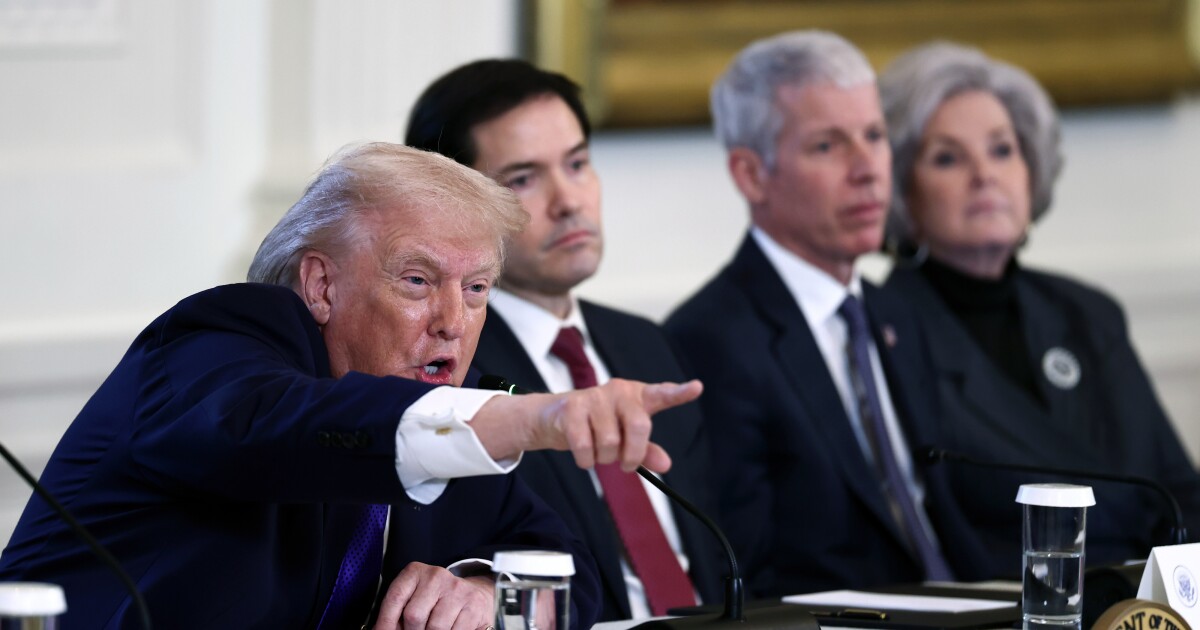
If it comes to fruition, President Trump's call for a $200 billion purchase of mortgage-backed securities could further tighten MBS spreads in the near term. But with few details available, many market participants are skeptical about the longer-term impact.
In response to the president
The initial impact of the Trump MBS post
The most immediate impact of the post has been on MBS spreads, which have compressed 20 basis points in the last 24 hours alone, said Michael Craig-Scheckman the CEO of Deer Park Road, an alternative investment firm.
Still, the details of the president's plan to have Fannie and Freddie use government money to buy back MBS are light, said Ryan Reich, chief investment officer at Mountain Shore Properties.
"One question to ask is 'over what time period?', that will matter," Reich said.
Reich pointed to the Federal Reserve's 2009 Treasury purchases, where a $300 billion program produced an estimated 50-basis-point stock effect. A similar-sized purchase today, he said, would likely have a much smaller impact.
How the GSEs can fund the MBS purchases
The GSEs have enough in other investments, such as cash equivalents and Treasuries to fund the purchases, although they might have to add debt to maintain liquidity for operations, a report from J.P. Morgan said.
The bank also pointed to
Why spreads have already narrowed
As
With the Federal Reserve winding down quantitative tightening, debate has resurfaced over who should serve as the buyer of last resort in the MBS market. Some market participants argue it should be neither the Fed nor the GSEs, a position outlined in a recent Urban Institute paper.
Even so, additional buying would likely tighten spreads in the short term, said Laurie Goodman, founder of the Urban Institute's Housing Finance Policy Center.
"But without a more defined long-term game plan for the portfolios, they will have little room to do more," Goodman said, particularly if Preferred Stock Purchase Agreement caps remain in place.
She warned that once spreads widen again, the GSEs would have limited capacity to respond. "It is not clear that this will have a long-term impact on mortgage rates," she said.
Compass Point analyst Ed Groshans added that the GSEs do not have $200 billion in cash or combined equity.
"Both companies remain critically undercapitalized based on their third-quarter filings," Groshans wrote. While MBS purchases would not affect risk-based capital requirements, they would increase the GSEs' statutory capital deficit by roughly $5 billion.
Is there room for further tightening?
Agency MBS spreads currently sit around 89 basis points over Treasuries, roughly in line with long-term averages, KBW analyst Bose George said. That suggests limited room for further tightening, though spreads were about 25 basis points tighter before the pandemic.
During the Fed's 2020–2021 quantitative easing program, spreads narrowed significantly more, but George said the impact of this proposal would likely be far smaller given its scale compared with the Fed's trillion-dollar purchases.
Growth in retained portfolios could modestly improve the GSEs' return on equity and potentially support future privatization efforts, George said, all else equal.
Who benefits most
Near-term beneficiaries include agency MBS REITs such as Annaly, AGNC and Dynex. Tighter spreads could also help publicly traded originators including Pennymac, Rithm, Rocket and United Wholesale Mortgage, as well as title insurers that depend heavily on origination volumes.
Still, the earnings impact is likely to be modest, analysts said.
BTIG analyst Eric Hagen sees near-term upside for mortgage originator stocks following Trump's post. In a report on Dynex the following day, Hagen called it his "favorite stock to reap the immediate benefit" of the directive.
Skepticism and criticism
Not everyone is convinced. Chris Whalen, chairman of Whalen Global Advisors, strongly opposes the idea.
"Because the GSEs or Treasury must hedge their portfolios, the net impact on mortgage rates will be zero while taxpayer risk increases," he wrote in an Institutional Risk Analyst blog post.
Whalen called a $200 billion program "a rounding error" that would not meaningfully improve affordability. He also warned that repurchasing GSE debt could ultimately push long-term interest rates higher. He referred to his October National Mortgage News article,
Norbert Michel of the Cato Institute argued that expanding GSE portfolios would only increase the likelihood of another taxpayer bailout. "If the administration wants to make housing more affordable," he said, "it should not expand the GSEs' financial portfolios."
What it means for mortgage rates
Execution will determine whether mortgage rates actually fall. Hagen expects purchases to focus on current-coupon securities, which would have the most direct impact on rates. He predicted originators could quickly pass through tighter spreads, potentially advertising sub-6% mortgages within days.
George was more cautious, noting that a 25-basis-point rate decline would bring only 3% to 4% of borrowers back into the money.
By Friday afternoon, Lender Price data
Still, Craig-Scheckman said the announcement alone is unlikely to drive a sustained move lower in rates. Others echoed that sentiment, noting no MBS purchases have yet occurred.
"This is the market reacting to a suggestion," said Kevin Watson of Churchill Mortgage.
Timing questions remain
Market participants remain focused on when and how purchases would be made. Victor Kuznetsov of Imperial Fund Asset Management said much of the expected tightening may already be priced in.
Whether purchases are spread across 2026 or concentrated in a shorter window will matter, analysts said. Hagen expects activity to unfold over at least six months, depending on refinance volumes triggered by lower rates.
Implications for conservatorship
Wedbush analyst Henry Coffey said the proposal aligns with Trump's
"He wants both affordability and monetization of the Treasury's warrants," Coffey said. Trump, he added, sees lower rates as economic stimulus and appears committed to a recap-and-release strategy that balances investor returns with mortgage market stability.