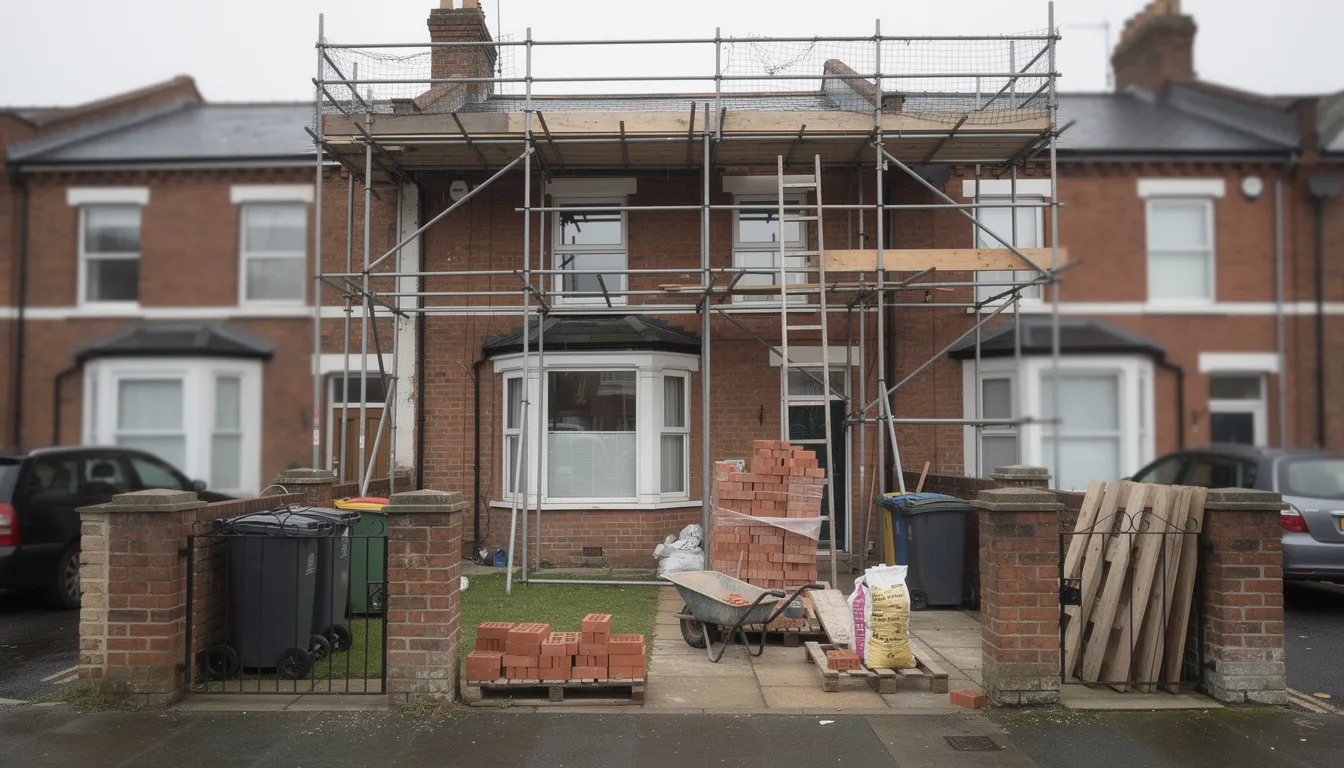
Introduction to Home Extension Financing
This guide is designed for UK homeowners planning a house extension in 2026 who want to understand their financing options and avoid costly mistakes. Financing a house extension is a crucial step in turning your plans for extra living space into reality. With a wide range of financing options available in the UK, it is essential to understand how each method works and which is best suited to your circumstances.
Whether you are considering personal loans, secured loans, or equity release, your choice will depend on factors such as your property value, current mortgage, and credit rating. This guide will help you understand how to finance a house extension in 2026, ensuring you make informed decisions and avoid unnecessary costs.
A mortgage broker can be invaluable in helping you navigate the complexities of home extension financing. They can assess your financial situation, explain the pros and cons of each option, and help you secure the most suitable deal for your extension project. From remortgaging your existing property to exploring specialist loans, understanding your options ensures you can fund your house extension efficiently and cost-effectively.
By taking the time to review your current mortgage, assess your credit rating, and explore all available financing options, you will be well-placed to make informed decisions. This careful approach not only helps you secure the funds you need but also ensures your extension project adds real value to your property and enhances your living space for years to come.
Key Takeaways
This section summarises the essential points to consider when financing a house extension in 2026:
- Typical UK house extension costs in 2026 range from approximately £35,000 to £80,000 or more, depending on size, complexity, and location.
- Financing choices impact your long-term finances more significantly than the builder’s quoted price.
- The main finance routes include using personal savings, remortgaging to release equity, further advances from your current mortgage lender, second-charge mortgages, short-term bridging finance, and unsecured borrowing such as personal loans or credit cards.
- Using cash savings eliminates the need to borrow and reduces financial risk.
- Before deciding whether to remortgage or keep your existing mortgage rate and add extra borrowing, it is important to check your current deal, available equity, and what you can realistically afford each month.
- Accurate cost estimates and careful planning are essential to avoid borrowing too little or too much.
- Professional guidance can help compare products across the UK mortgage market to find the best fit for your extension project.
Typical House Extension Costs in 2026
Understanding the typical costs involved in house extensions is essential for accurate financial planning and borrowing decisions. Costs vary significantly by region—London and the South East typically incur 30–35% higher expenses than other parts of the UK. Obtaining quotes specific to your area is imperative for realistic budgeting.
Single-storey Extensions
- Outside London: approximately £2,200 to £3,300 per square metre.
- London and South East: costs can be up to 30–35% higher due to increased labour and material costs.
- Example: A typical 20m² kitchen-diner single-storey extension outside London might start around £55,000 to £65,000 in 2026.
Two-storey Extensions
- Generally cost 40–60% more than a single-storey extension overall.
- They are cheaper per square metre of additional living space because foundations and roof structures are shared.
- Often the most cost-effective way to add an extra bedroom plus ground-floor space.
Loft Conversions
- Velux (roof-light) conversions: approximately £30,000 to £45,000.
- Dormer conversions: approximately £45,000 to £65,000.
- Mansard conversions: approximately £65,000 to £90,000 or more.
- Costs depend heavily on the existing roof structure and the extent of required structural work.
Kitchen Extensions with Refit
- Basic kitchen fit-out added to an extension: approximately £55,000 to £75,000 total.
- Mid-range package: approximately £75,000 to £100,000.
- High-end with designer kitchen: £100,000 or more.
Bathroom or Shower Room Addition
- UK average in 2026: approximately £8,000 to £15,000 for the room itself.
- Higher costs apply if significant plumbing runs or drainage work are required.
These figures include labour and materials but generally exclude top-end fixtures such as designer kitchens or bespoke joinery. When comparing builder quotes, always clarify what is included.
It is prudent to add a 10–20% contingency on top of any quote to cover unexpected construction costs, planning delays, or design changes during the build.
Hidden, Legal and Professional Costs to Budget For
Many homeowners underestimate the total cost of extensions by overlooking fees, VAT, and professional costs. Lenders expect a realistic total figure in any finance application; insufficient budgeting can cause mortgage applications to stall or be declined.
Key Additional Costs
- VAT: Most extension work attracts VAT at 20% in 2026. Confirm whether builder quotes include VAT. For example, a £60,000 quote plus VAT becomes £72,000.
- Professional fees: These include architects, structural engineers, surveyors, party wall surveyors, building control fees, planning application fees, and utilities approvals (e.g., Thames Water, electricity connections).
- Insurance: Site insurance during construction, updating home insurance to cover the works, and warranty or latent defects insurance for larger projects.
- Temporary accommodation: Budget for alternative living arrangements or making-good costs if parts of your home become uninhabitable during construction.
- Lender fees: Valuation fees, product fees, and legal fees when raising money via a new mortgage, further advance, second mortgage, or bridging loan.
A sensible rule of thumb is to allow 10–15% of your construction costs for professional fees and unforeseen issues. Including this buffer in your total finance requirement helps avoid shortfalls during the build.
Call for immediate expert advice. Complete our enquiry form Email outline your requirements
Planning and Budgeting Your Extension Before You Borrow
Lenders prefer structured plans with clear architectural drawings, itemised costings, and realistic timescales. Demonstrating thorough preparation improves the likelihood of finance approval, especially for larger projects or staged funding.
Key Preparation Steps
- Clarify your objectives: Determine whether you need more bedrooms, open-plan family space, a home office, accessibility changes, or energy-efficiency upgrades. These factors influence future property value and resale potential.
- Obtain multiple quotes: Secure at least three fixed-price or detailed quotes from reputable builders, ideally with 2026 start-date availability and clear payment schedules mapped to work stages.
- Check your planning position: Understand when full planning permission is required versus what is allowed under permitted development rights in England and Wales. Scotland and Northern Ireland have different rules; always confirm with your local authority.
- Build a full realistic budget: Include construction costs, fixtures and fittings, professional fees, contingency, and finance costs (interest and fees) for the borrowing period.
- Map work stages to cash flow: Some lenders require knowing if you need a lump sum upfront or funds released in stages, which affects the choice of finance products suitable for your building project.
Do not start work before finance is fully approved. It is recommended to have at least a mortgage offer in principle before signing major build contracts to avoid being locked into a project you cannot afford.
Establishing a Realistic Budget
Establishing a realistic budget is essential for planning a house extension project. Homeowners should consider all aspects of the project, including construction materials, labour, permits, and architectural fees. It is advisable to include a contingency fund of at least 10% in your budget for unforeseen expenses.
Main Ways to Finance a House Extension in 2026
The most suitable solution for funding your extension depends on your existing mortgage rate, available equity, credit history, project size, and timescale. There is no one-size-fits-all answer; what works well for one homeowner may be expensive or impractical for another.
Summary of Major Financing Options
The following list summarises the primary ways to finance a house extension in 2026, each covered in detail in this guide:
- Using savings and investments.
- Leveraging home equity through remortgaging, further advance, or second charge mortgage.
- Remortgaging to raise capital.
- Further advances with your current lender.
- Second charge mortgages or homeowner loans.
- Short-term bridging finance.
- Unsecured personal loans.
- 0% interest credit cards for small-scale costs or materials.
- Government schemes and grants, such as the Green Homes Grant.
- Specialist construction loans, including staged self-build mortgages.
- Equity release and lifetime mortgages.
Each route has different criteria, costs, advantages, and disadvantages. This guide references how a mortgage broker can compare deals across multiple lenders and structure the finance to suit your build programme and risk appetite.
Using Savings or Investments
Funding at least part of your extension from cash funds is usually the cheapest option because it avoids interest charges altogether. If you have been saving money specifically for home improvement, now is the time to deploy it.
Key Guidance on Using Personal Savings
- Maintain an emergency fund of 3–6 months’ essential outgoings even if that means borrowing a small amount rather than draining all savings, especially in 2026’s higher cost-of-living environment.
- Compare returns versus borrowing costs: If your investments earn less than your likely mortgage or loan interest rate, using those funds to reduce borrowing often makes financial sense.
- Smooth cash flow strategically: Use savings for early stages such as deposits, design fees, and architect costs, while arranging mortgage-based finance for later build payments.
- Lenders may require evidence of any own funds used as part of their affordability and risk assessment for larger projects.
A blend of cash and borrowing is common and often sensible; you do not need to fund the entire extension from savings.
Remortgaging To Fund Your Extension
Remortgaging is the main route many homeowners use to raise substantial sums for home extensions—typically between £40,000 and £250,000 or more—usually at relatively low interest rates spread over a long loan term. Remortgaging allows you to borrow more money for home improvements or extensions by increasing the mortgage loan amount.
What Remortgaging Involves
- Replacing your current mortgage with a new mortgage (often with a different lender), increasing the loan balance to release equity for the build. You will receive the additional funds as a lump sum at completion.
Key Considerations
- Loan-to-value (LTV): In 2026, most mortgage lenders are comfortable with up to about 90% LTV for home improvement borrowing, subject to income and credit checks. The LTV is based on your current property value, not the anticipated value after works.
- Affordability: Lenders assess income, outgoings, credit commitments, and dependants. They also stress test your ability to afford higher mortgage rates.
- Early repayment charges (ERCs): If your existing mortgage is within a fixed or discounted deal, ERCs may make remortgaging expensive. Check your mortgage offer or annual statement to understand applicable penalties.
- When remortgaging makes sense: When your existing mortgage rate is due to end soon, when current market mortgage rates are lower than your existing rate, or when you need a large sum and have sufficient equity.
- Extensions costing over £30,000: These are often best financed through remortgaging due to lower interest rates compared to unsecured loans.
- Cost-effective equity release: Remortgaging to fund an extension is often the most cost-effective way to release equity for a major renovation project.
- 2026 remortgage rates: In early 2026, UK mortgage rates for remortgaging started as low as 3.61% to 3.74% for homeowners with 40% equity.
- Debt consolidation: Remortgaging can consolidate existing debts into one secured payment with a lower interest rate.
- Base rate context: The Bank of England base rate stood at 3.75% in January 2026, with predictions suggesting a drop to 3.0% to 3.25% by year-end.
Typical Remortgaging Process
- Indicative valuation and agreement in principle.
- Full application with documentation (payslips, bank statements, tax returns for self-employed).
- Formal valuation survey.
- Legal work and completion.
- Funds released (typically 4–8 weeks from application).
Worked Example
A homeowner with a property worth £400,000 and an outstanding mortgage of £250,000 remortgages to £320,000. This releases £70,000 for a side extension. Their monthly mortgage payments increase based on the new, larger balance, but they have funded the project at mortgage rates rather than higher unsecured loan rates.
A mortgage broker can compare whole-of-market remortgage products, including lenders particularly comfortable with home-improvement capital raising and extra borrowing.
Further Advance With Your Existing Lender
A “further advance” means borrowing additional funds from your current mortgage lender, leaving your main mortgage product unchanged while adding a new sub-account at a potentially different rate and term.
When a Further Advance is Attractive
- You are in the middle of a competitive fixed rate with large early repayment charges, making a full remortgage expensive.
- Your current deal offers good terms and you do not want to lose them.
- Your current lender offers additional borrowing specifically for home improvements at reasonable rates.
Key Points
- LTV and purpose rules: Lenders usually cap overall LTV at 80–90% and will ask what the funds are for, sometimes requesting quotes or plans for larger projects.
- Rates and terms: The further advance may carry a different rate (often higher than headline remortgage deals) but still cheaper than an unsecured loan. Terms can run up to 25–35 years depending on lender policy and your age.
- Simpler process: Typically easier than a full remortgage since you are staying with the same lender, though affordability checks and often a new valuation are still required.
- Drawdown and timing: For complex projects, a lump-sum further advance can be paired with staged payments to the builder from your own account.
A mortgage broker can help you decide whether remortgaging to a new lender or requesting a further advance from your current lender offers better value for your specific situation.
Second-Charge / Homeowner Loans
A second charge mortgage is an additional loan secured against your property that does not affect your existing mortgage. It is also called a home equity loan or homeowner loan and sits behind your existing mortgage, using the same property as security.
When Second-Charge Loans Can Be Useful
- Your main mortgage has an excellent rate with large ERCs that would be costly to break.
- Your circumstances mean specialist lenders are more flexible than mainstream remortgage lenders.
- You have adverse credit history that limits standard remortgage options.
Key Details
- LTV structure: Combined LTV limits (main mortgage plus second charge) typically do not exceed 75–85% of current property value for most mainstream-style products in 2026.
- Lending criteria: Minimum loan sizes often start around £10,000 to £30,000, with maximums of £250,000 or more depending on equity. Acceptable purposes include house extensions, loft conversions, and substantial refurbishments.
- Cost comparison: Second-charge rates are often higher than first-charge remortgage rates but can still be competitive compared with personal loans, especially for borrowing over £30,000.
- Risks: As with any secured borrowing, if you miss payments your home is at risk. Total interest over a long loan term may be significant. Always model the full repayment plan.
A mortgage broker can access specialist lenders not always available directly to the public and weigh this option against remortgaging and further advances.
Unsecured Loans and Credit Cards for Smaller Works
For modest projects—typically under £20,000 to £25,000—or as a top-up where main finance comes via mortgage borrowing, unsecured borrowing can play a role.
Personal Loans
- Usually available up to £25,000 to £50,000.
- Fixed terms (often 2 to 7 years) with interest rates based on credit score.
- Faster to arrange than secured borrowing but typically more expensive.
- Monthly repayments are fixed and predictable.
0% Purchase or Balance-Transfer Credit Cards
- Can spread material costs or stage payments over 12 to 24 months interest-free.
- Only viable if you clear the balance before the promotional rate ends.
- Requires discipline and careful planning.
Risks to Consider
- Higher APRs (often 18% or more on standard credit cards, up to 40% on overdrafts) if promotional periods end or if you miss payments.
- These debts form part of affordability calculations for any future remortgage or further advance.
- Not suitable as the main funding source for larger projects.
For larger home extensions, unsecured borrowing is rarely the primary strategy but can be useful for final finishes, furniture, or minor overruns where a remortgage or secured loan already covers most extension costs.
Fox Davidson do not offer advice on unsecured loans or credit cards.
Equity Release and Lifetime Mortgage Options
For homeowners looking to unlock the value tied up in their property, equity release and lifetime mortgages offer a flexible way to fund a house extension. These options allow you to release equity, either as a lump sum or through regular payments, without having to sell your home. With a lifetime mortgage, you borrow against a percentage of your property’s value, and the loan is typically repaid when you pass away or move into long-term care.
Equity release can be particularly useful if you have significant cash funds tied up in your home but limited income to support higher monthly repayments. Specialist lenders offer a range of products tailored to different needs, and a mortgage broker can help you compare the best deals on the market. It is important to consider the long-term impact on your estate, as releasing equity will reduce the inheritance you leave behind and may affect your eligibility for certain benefits or care funding.
Before proceeding, seek advice from a qualified mortgage broker or financial adviser who can explain the implications and help you decide if equity release or a lifetime mortgage is the right solution for your extension project. With the right guidance, you can release equity from your property to fund your house extension and enjoy the benefits of an improved living space.
Government Schemes and Grants for Home Extensions
Government schemes and grants may be available to assist homeowners with financing home improvement projects, such as the Green Homes Grant.
Government schemes and grants provide valuable support for homeowners planning a house extension. While most mainstream finance options involve loans or remortgaging, there are specific schemes designed to make home improvements more affordable. For example, the Help to Buy Equity Loan scheme offers an interest-free loan for a set period, which can be used to cover part of your extension costs, subject to eligibility.
Additionally, initiatives like the Green Homes Grant encourage energy-efficient improvements, such as loft conversions or basement extensions that enhance your home’s sustainability. Local authorities and housing associations may also offer grants or subsidies for certain types of extension projects, particularly those that improve accessibility or support community housing goals.
Exploring these government-backed options can help you access additional funds, reduce your overall extension costs, and make your project more financially viable. Always check the latest eligibility criteria and application processes, as schemes and grants can change over time. By combining government support with other financing options, you can make your house extension project more affordable and add lasting value to your property.
Specialist Construction Loans and Development Finance
When your house extension project involves significant construction or complex works, specialist construction loans and finance products can offer the flexibility you need. Unlike standard mortgages, these loans are designed to provide staged funding as your build progresses, helping you manage cash flow and pay contractors at key milestones.
Specialist lenders offer a variety of financing options, including bridging loans, development finance, and self-build mortgages. These products often feature interest-only repayments during the construction phase, with the option to switch to a standard repayment structure once the project is complete. While interest rates may be higher than traditional mortgages, the flexibility and tailored approach can be invaluable for larger or more complex extension projects.
As mortgage broker with experience in construction finance we can help you navigate the different products available, assess your eligibility, and structure the loan to suit your build schedule. By working with specialist lenders and securing the right financing option, you can ensure your house extension project runs smoothly from start to finish.
Next, we will examine how your home and finances affect what you can borrow.
How Your Home and Finances Affect What You Can Borrow
Mortgage lenders in 2026 focus closely on affordability, overall debt levels, and how the finished extension will impact your current property.
Key Factors Lenders Assess
- Current property value and equity: An up-to-date valuation determines maximum loan-to-value (LTV). Significant unsecured debts or existing second charges reduce your borrowing headroom.
- Income and outgoings: Lenders consider salary, bonus history, self-employed accounts or tax returns, childcare costs, existing loan and credit card commitments. Different lenders apply different income multiples.
- Credit history and credit rating: Recent missed payments, defaults, or high credit utilisation can limit options or push you towards specialist lenders at higher rates.
- Property type and construction: Non-standard construction or flats above commercial premises may restrict lender choice or maximum LTV.
- Future plans: How long you plan to stay affects product choice. If this is becoming your forever home, a longer fixed rate might suit your extension project. If you might move soon, flexibility matters more.
Our mortgage brokers will carry out an initial fact-find with you to assess these areas before recommending a specific borrowing route.
Home Extension and Value Added
A well-executed house extension can be one of the most cost-effective ways to increase your property’s value and enhance your living space. Whether you are planning a storey extension, loft conversion, or a new kitchen-diner, careful planning and accurate cost estimates are essential to ensure your project delivers a strong return on investment.
By setting a realistic budget and factoring in all extension costs and construction costs, you can avoid overspending and maximise the value added to your home. Consider current property prices in your area and consult with local estate agents to understand how your planned extension could impact your property’s market value. Features like an extra bedroom, open-plan living, or improved energy efficiency can make your home more attractive to future buyers.
With the right financing option and expert guidance, your extension project can transform your existing property, providing a more functional and enjoyable living space while boosting its long-term value. Investing in a house extension is not just about creating more room—it is about making your home work better for you and increasing its appeal in the property market.
Step-By-Step: From Idea to Funds in Your Account
This section outlines a clear, practical roadmap for UK homeowners in 2026 to follow from the initial concept of a house extension through to having funds available for construction.
Step-by-Step Process
- Define the project: Decide on extension type, rough size, and objectives. Determine if you need an additional bedroom, an open-plan kitchen-diner, a home office, improved accessibility, or more living space.
- Get outline costs: Consult an architect or experienced builder for ballpark figures based on your plans. Refine with formal quotes—aim for at least three.
- Check planning and building regulations: Confirm whether planning permission is required or if your project falls under permitted development rights. Factor in timelines for local authority approvals.
- Review your current mortgage and finances: Check your current deal, remaining term, early repayment charges, outstanding balance, and any unsecured debts. Gather recent payslips, bank statements, and tax returns if self-employed.
- Speak to a mortgage broker: Explore remortgage, further advance, second-charge, or bridging options. A broker can provide an idea of achievable loan sizes, monthly costs, and which route makes the most sense.
- Secure an agreement in principle (AIP): Use the AIP to confirm budget with your builder and lock in a realistic scope of works. This shows you have finance in place.
- Submit full application and valuation: Provide required documents such as ID, proof of address, income evidence, and bank statements. The lender arranges a valuation of your property.
- Receive offer, complete legal work, and draw down funds: Funds for standard mortgages and second charges are normally released to your solicitor or directly into your bank account shortly after legal completion.
- Keep lender updated if plans change materially: If your build scope or total cost changes significantly during works, inform your lender and adviser promptly.
How a Mortgage Broker Helps Homeowners Finance Extensions
Mortgage brokers specialising in home extension finance provide expertise that is invaluable throughout the borrowing process. they understand that an extension project is often the largest financial commitment a homeowner makes after their original mortgage.
How Brokers Assist
- Whole-of-market access: Brokers compare remortgage, further advance, and second-charge options from a wide range of UK lenders, including specialist lenders comfortable with large-scale extensions and structural works.
- Structuring complex projects: Brokers have experience arranging finance where funds are needed in stages, where temporary bridging is required, or where the property will be substantially altered.
- Navigating ERCs and existing deals: Brokers help clients weigh up whether to break an existing fixed rate or retain it and add extra money via a further advance or second charge.
- Documentation guidance: Brokers advise on the plans, quotes, and cost breakdowns lenders typically want to see for extension projects in 2026, helping you build accurate cost estimates.
- Ongoing support: Brokers stay in contact right through to completion of your works and can help you review your mortgage again once the project is finished, especially if your property is now worth more.
Making an informed decision about extension finance requires expert advice tailored to your circumstances. Booking a no-obligation call or online consultation with a qualified mortgage broker before committing to any large borrowing is highly recommended.
Frequently Asked Questions
This section addresses common questions about financing house extensions that are not fully answered in the main guide.
Most mainstream mortgage lenders will only lend against your current property value, not the projected post-works value, when approving remortgages, further advances, or secured loans for extensions. Occasionally, specialist products consider proposed works, but these are less common. Generally, borrowers complete the works first, perhaps using savings or personal loans, then refinance once the higher property value is proven by a new valuation. A mortgage broker can discuss whether any lenders currently on the market are open to considering proposed post-works value for your specific project.
For many straightforward extensions under permitted development rights, formal planning permission is not always required before approaching a lender. However, clear plans and accurate cost estimates remain important for your application. For larger or more complex projects, particularly storey extensions, basement conversions, or major structural work, lenders may require evidence that planning permission has been granted before releasing funds. This is especially true for bridging loans or more specialist development finance. Early coordination between your adviser and architect is advisable to align planning and finance timelines.
For a straightforward remortgage or further advance, the typical timeframe is 4 to 8 weeks from application to additional funds being available, assuming documentation is provided promptly and no complications arise. Second-charge loans can sometimes complete slightly faster, and development finance may be arranged within 2 to 4 weeks where timing is critical, though this is not guaranteed. It is important to build timing slack into your construction schedule and avoid committing to contractor start dates that assume instant finance.
Taking on extra borrowing increases your total mortgage debt, which affects affordability checks if you later want a new mortgage for a different property. If your income or credit circumstances weaken between now and when you want to move, this could make the property market harder to navigate. Many mortgages are portable, meaning you can potentially transfer your deal to a new property, but porting is subject to underwriting at the time of the move. If you may wish to move within a few years, discuss this with your mortgage broker so product choice (fixed-rate length, early repayment penalties, portability terms) can factor in your future plans.
The main cost comparison involves moving costs (stamp duty, estate agent fees, legal fees, removals) versus extension costs plus finance charges over your chosen loan term. In many parts of the UK in 2026, extending can still be more cost effective than trading up, especially where homeowners are settled in an area and only need one extra bedroom or a better layout. An estate agent can advise on local property prices and whether your extended home would be competitive in the market. A mortgage broker can help model both scenarios from a mortgage perspective, enabling you to make a fully informed decision about whether to improve your existing home or start looking elsewhere.
Build Project Financing and Management
Successfully financing and managing your build project requires a strategic approach from the outset. Work with a mortgage broker who understands the complexities of house extension finance and can guide you through the available options, whether that is a traditional mortgage, bridging loan, or another tailored solution. Accurate cost estimates are essential—ensure you have a detailed breakdown of expected expenses, including construction costs, professional fees, and a contingency for unexpected issues.
Key Considerations for Project Management
- Repayment plan: Your repayment plan should be realistic and take into account your current mortgage commitments, credit history, and overall financial situation.
- Lender assessment: Lenders will assess your ability to manage additional borrowing, so it is important to present a clear and credible plan for repaying any loan or mortgage you take out.
- Specialist products: If your project is particularly complex or time-sensitive, specialist lenders may offer products designed for staged payments or short-term bridging finance, helping you manage cash flow throughout the build.
By staying organised and proactive—regularly reviewing your budget, monitoring spending, and maintaining open lines of communication with your lender and builder—you can avoid common pitfalls and ensure your house extension is completed on time and within budget. Careful financial management not only protects your investment but also helps you achieve the home improvement you envision without unnecessary stress.
Extension Project Timeline and Milestones
Establishing a clear timeline and setting key milestones are essential steps to ensure your extension project runs smoothly from start to finish. Begin by creating a realistic budget that accounts for all construction costs, professional fees, and a contingency for unforeseen expenses. Secure your financing early, whether through a mortgage, personal loan, or secured loan, to avoid delays once work is ready to begin.
Key Milestones
- Obtain planning permission and building regulations approval, as these can impact your schedule.
- Hire a reputable builder or contractor and agree on a detailed work schedule with defined payment stages.
- Maintain regular communication with your builder and mortgage broker to monitor progress and address any issues promptly.
- Review your budget and timeline regularly, making adjustments as needed to keep the project on track.
- Consider appointing a project manager for large or complex builds to coordinate contractors, manage costs, and ensure milestones are met.
By carefully planning each stage and remaining engaged throughout the process, you will not only add valuable living space to your current property but also enhance its market value and enjoy the long-term benefits of your home improvement investment.
Call for immediate expert advice. Complete our enquiry form Email outline your requirements