- Key insight: Elevated inflation and expected rate hikes are driving bond yields to 20-year highs, but an uptick in corporate issuance with long-dated maturities is also putting pressure on bond prices and the rates they shape.
- Expert quote: "A lot of the hyperscalers are issuing long term debt, 30-year debt, which is in direct competition with Treasuries. There's a finite number of investors who are willing to invest in really long-dated fixed income products. It's a deep market, but it's not infinite." — Skanda Amarnath, executive director of Employ America
- Forward Look: With annual AI-related capital expenditures expected to top $1 trillion next year, longer term rates could remain high for the foreseeable future, barring a sharp downturn in the tech sector.
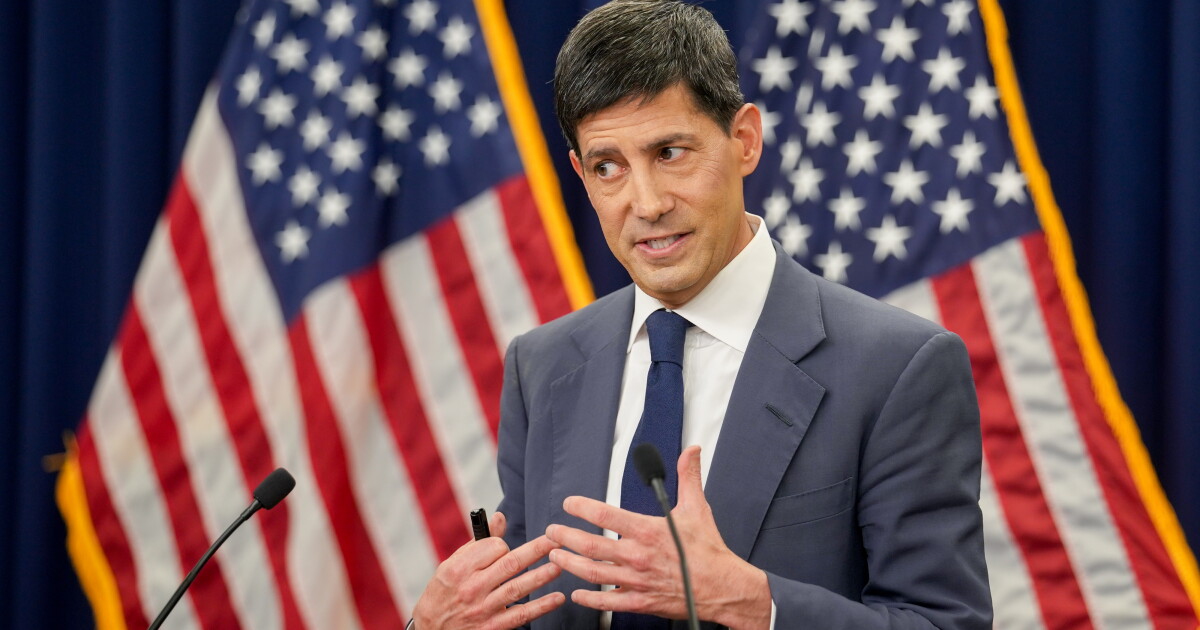
Federal Reserve Chair Kevin Warsh has an
In his post-Federal Open Market Committee
"The surge in capital expenditures … is real, and the so-called hyperscalers are out in the market raising funding, and so the competition for capital is real and I think it partly explains the increase in yields," Warsh said.
The assertion, at face value, runs counter to conventional wisdom around how private and public borrowing affect one another in capital markets. Typically, the concern is that as government debt issuance increases, it risks "crowding out" private investment — pulling savings and investment capital toward the safety of risk-free government debt instead of other opportunities.
Government debt issuance has indeed been increasing, but private borrowing has been rising more quickly and, in a new wrinkle, much of that debt is being spread over multi-decade maturities.
"A lot of the hyperscalers are issuing long term debt, 30-year debt, which is in direct competition with Treasuries," said Skanda Amarnath, executive director of Employ America and a former capital markets analyst for the Federal Reserve Bank of New York. "There's a finite number of investors who are willing to invest in really long-dated fixed income products. It's a deep market, but it's not infinite."
This flood of investment-grade bonds from leading tech firms, Amarnath said, has led some of these long-term investors — typically pension funds and insurance companies looking to match the duration of their liabilities — to trade the safety of government-backed securities for higher yielding corporate debt.
Read more:
AI might be in its bubble phase. How exposed are banks? Fed's Barr: 'Further policy adjustments are likely' AGs warn Congress that AI threatens the financial system Fed's Williams says more work needed to lower inflation
So far this year, the Treasury has issued nearly $3.3 trillion in the form of two- to 10-year notes and longer-term bonds through August, according to data compiled by the Securities Industry and Financial Markets Association, or SIFMA. This puts the government on track to raise more than $4.9 trillion through securities, an increase of around 2% from last year. Meanwhile, nearly $1.9 trillion was raised via corporate bonds through August. If that pace holds, private bond financing could surpass $2.8 trillion, an increase of 28% from 2025, the second-best year for corporate issuance of the past decade, trailing only 2020.
Bonds — which have maturities of 20 or 30 years — have accounted for around $344 billion, or 12% of Treasury's medium and long-term issuance so far this year. Meanwhile, issuance of corporate bonds of 10 years or longer has totaled $752 billion thus far, according to SIFMA and Refinitiv, or nearly 40% of the market.
While a host of industries and companies are active in the corporate bond market, tech firms have been a driving force behind this recent growth. In 2025, the sector accounted for 12.2% of corporate bond offerings and 20% of proceeds, according to the Securities and Exchange Commission. Through the first two quarters of the year, those figures jumped to 15.5% and 28.7%, respectively.
John Velis, Americas macro strategist at BNY, said this increased issuance and the willingness to extend the maturity schedule has created a level of competition for Treasury bonds not seen since the dotcom boom of the 1990s.
"The principle behind it is this competition for capital," Velis said. "Long-term investors would prefer AAA or investment grade sexy bonds that are of the current investment theme, which is now AI."
Velis noted that this competition is not the only thing driving up bond yields, pointing to supply side shocks driving up the cost of oil and related goods and services. He added that the potential productivity gains from AI are also factoring into bond rates, as are recent declines in demand for U.S. debt abroad.
"If the return on capital is expected to be higher, the return on risk-free capital has to rise to meet that and equilibrate both public and private markets," he said. "Also, sovereign investors are less interested in buying American bonds because they can get comparable returns locally now through German bunds, UK gilts, JGBs in Japan, etc."
While the view that the surge in AI investment is driving up bond yields, either through competition or future expectations on returns, is broadly accepted by economists, some question emphasizing it puts the current macroeconomic environment in its proper context.
Rodney Ramcharan, professor of finance and business economics at the University of Southern California, said the positive implications of the AI investment boom should be balanced with an acknowledgment of its accompanying risks.
Specifically, Ramcharan said the fact that government borrowing continues to balloon amid a market expansion could leave the U.S. in a poor position to deal with a severe correction.
"Classic economic models talk about bubbles and psychology and mania, and so a prudent risk manager would help articulate these concerns to the American public, and would arguably begin to signal that Congress needs to step in and begin to curtail budget deficits," he said. "If this turns out to be a bubble in the short run, like it was in 1999, 2000, then budget deficits are going to go way, way up, when economic growth slows. A 6% deficit to GDP will immediately become 9% to 10%."