- Key insight: As the president continues his effort to remove Federal Reserve Gov. Lisa Cook from her post at the Federal Reserve Board for cause, both he and the courts have little precedent to draw upon for guidance.
- Expert quote: "I wonder if the Supreme Court preserved some discretion for itself by not going into what, exactly, is required for for-cause removal. I also wonder if the court, by not defining what is required, by not setting forth a roadmap, reserved the right to reject whatever process the president uses." — David Zaring, legal studies professor, Wharton School of Business at the University of Pennsylvania
- Forward Look: Cook has until Aug. 26 to respond to a letter from Trump informing her of his intention to remove her from office.
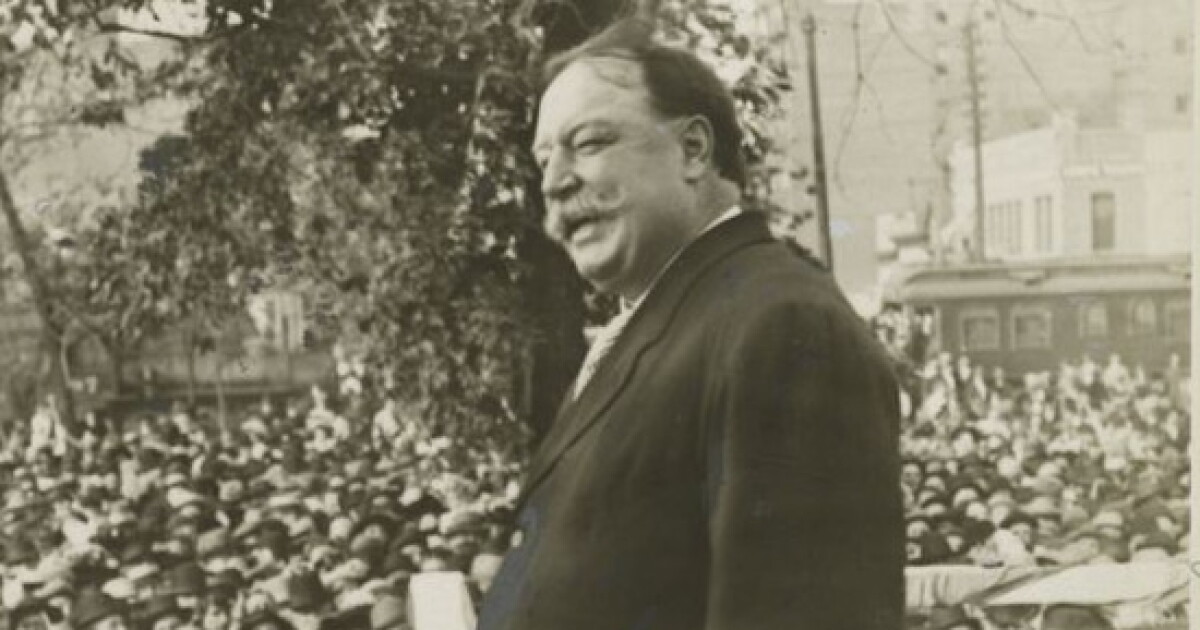
President Donald Trump has shown he has few qualms about upending longstanding precedent. But in his attempt to remove Federal Reserve Gov. Lisa Cook from office for cause, he's actually channeling one of his Republican predecessors: President William Howard Taft.
Depending on how it plays out, the process could set the standard for how difficult — or easy — it is for a president to remove officials from the central bank, a development that will likely set its own precedent and impact both monetary policy and
This month, the White House officially initiated a process to remove Lisa Cook from the Federal Reserve Board. He sent a letter formally notifying her of the allegations that she committed bank fraud by claiming two properties as her primary residence in a pair of mortgage applications and asking her to respond to the charges.
She has not been criminally charged, though the Department of Justice is
"President Trump supports the theory that all executive authority runs through the White House," Seiberg wrote. "This administration has already established its authority to remove Democrats from independent commissions. This is about expanding that power to the Federal Reserve."
The notice and response steps were called for in the
"This letter is basically the Truth Social post in a more legalistic format with those additional details that the Supreme Court required," said Jeremy Kress, a law professor at the University of Michigan.
Yet, the Supreme Court's decision gave little insight into what the rest of that process should look like. Writing for the majority in the court's opinion, Chief Justice John Roberts implied that Cook's rights to due process are not exhaustive, noting that Cook is not "entitled to an audience with the President or a full-blown judicial trial." He added that matters could be handled in writing only, as long as both sides were able to make their case.
Kress said once Cook responds to the White House's request for information — likely just ahead of the Aug. 26 deadline — the matter would likely revert back to Trump, who will then determine whether he has sufficient cause for removal.
"The whole premise of the unitary executive [theory] is that the president himself gets to make personnel decisions," he said. "So I don't imagine this being outsourced."
Yet, whatever process is chosen, if Trump decides he has sufficient cause to remove Cook, she will likely challenge that determination in court. David Zaring, a professor of legal studies and business ethics at the University of Pennsylvania's Wharton School of Business, said the question then becomes whether Cook will be permitted to remain on the Board of Governors during the litigation.
Last year, after Cook
That same process could repeat itself — or not. If the White House's new approach satisfies the notice and hearing requirements, Cook could find herself litigating from outside the Fed. Then, Zaring said, the question would be whether she would be eligible for reinstatement or simply for backpay.
In a statement, Cook's lawyer, Abbe Lowell, said the Fed governor will continue to fight for her place on the board, regardless of what the administration does next.
"These allegations are as baseless now as they were a year ago when President Trump tried to remove Governor Cook and interfere with the independence of the Federal Reserve," Lowell said. "No matter what President Trump tries to do next, this much is clear under the facts and Supreme Court precedent — there is no valid cause for removing Governor Cook. As we did before, we will challenge this latest pretext and preserve her position and the historic role of the Fed."
Zaring said the Supreme Court may have been intentionally vague about what steps the White House could take to successfully remove a Fed governor. By being ambiguous about the process, the court avoids boxing itself in and instead puts the impetus on the White House to develop a sufficiently evenhanded process — and reject a process that doesn't meet their standard.
Read more:
- Fiserv, FIS weigh options for underperforming business units
- CU vendor TruStage faces 14 suits over monthslong outage
- Second CFPB union member placed on administrative leave
- Fifth Third latest target in USAA's patent war with banks
"I wonder if the Supreme Court preserved some discretion for itself by not going into what, exactly, is required for for-cause removal," Zaring said. "I also wonder if the court, by not defining what is required, by not setting forth a roadmap, reserved the right to reject whatever process the president uses."
The judicial record is also light on precedent when it comes to for-cause removal standards, according to a
As president, Taft had direct experience in this matter. In the fall of 1912, he set out to fire two lifetime appointees to the Board of General Appraisers, a precursor to the U.S. Court of International Trade. To do so, he assembled a committee of inquiry to compile a report on the two officials. The committee recommended termination and Taft followed through on the final day of his presidency in 1913.
The fired board members did not challenge their removal and they stand as the only two for-cause firings in presidential history.
"We don't have any judicial gloss on what's required from that incident, but if that is what the court settled on as what's required is the process for for-cause removal, then the White House's letter doesn't meet that requirement," Zaring said. "It looks to me like it's a relatively short process that's contemplated, in the White House letter."
Taft's opinion from the Meyers case factored heavily into the Supreme Court's decision this year in Trump v. Slaughter, which found that the president has the power to remove any federal appointee — save those at the Fed — for any reason.
Trump's effort to remove Cook, a Biden-appointee to the Fed board, began last August following a criminal referral made against her by Federal Housing Finance Agency Director Bill Pulte, a Trump loyalist who has made similar mortgage fraud allegations against the president's political adversaries.
Cook filed a lawsuit challenging the dismissal and requesting an injunction that would allow her to continue serving on the board while the matter is adjudicated. Cook's request was granted, contested by the White House and, ultimately, confirmed by the Supreme Court on June 29.
The court's decision in the Cook case was released at the same time as Slaughter. Together, the rulings leave the members of the Federal Reserve Board as the only officials in Washington subject to for-cause protection.
Seiberg's analysis assigns a 75% probability that the administration uses Cook's response to the letter to fire her but only a 25% probability that she will actually be removed from office. Still, he said, the case could have significant consequences moving forward.
"We believe this fight is about far more than Cook's tenure," he wrote. "If President Trump can remove Cook for cause then he can remove other Fed governors for cause. And if Trump can do this, then other Presidents will likely similarly seek to remove governors. This would impact banking policy as more radical changes will be able to advance. And it would give the White House more power over monetary policy."