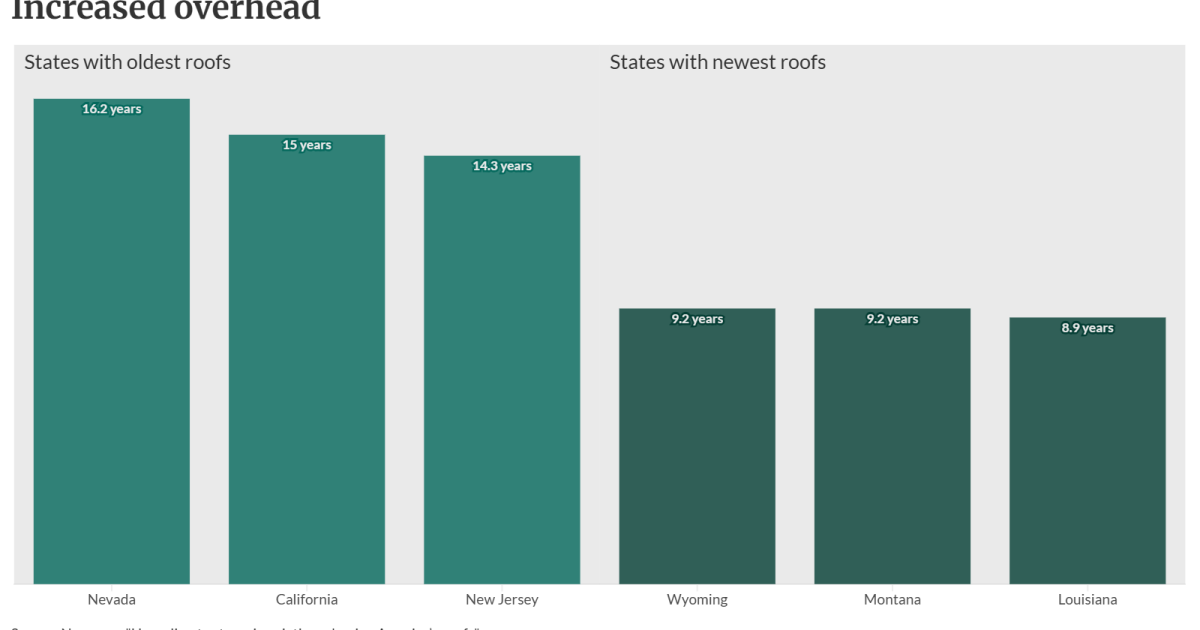
States with the youngest average roof ages see replacements 82% more frequently than states with the oldest average roof ages, according to AI-based research from Nearmap. And as these roofs need more frequent replacement, claims will also happen more often.
Using AI to analyze high resolution aerial data of nearly 3 billion roof images across 2,100 U.S. counties, Nearmap's "
While
"Climate risk doesn't only arrive with hurricanes, hailstorms or wildfires," said David Tobias, chief product officer at Nearmap. "Our analysis shows that everyday environmental conditions such as heat, humidity, rainfall intensity and temperature fluctuations are gradually reducing the lifespan of roofing materials across large portions of the country. Those effects accumulate over time, creating exposure that may not be visible in traditional models. For insurers, understanding how climate stress is reshaping housing is becoming just as important as understanding the next major storm."
The report also notes that shifting climate trends will continue to alter geographical risks across the country, and extreme rainfall has become one of the most significant risks to roof health. According to Nearmap, properties that were once in moderate-risk zones are now exposed to conditions that accelerate roof age. The land area at risk of the highest precipitation in the U.S. grew from about 35,000 square miles in 1980 to 1984 to over 300,000 square miles in 2020 to 2024. This is a 750% increase over four decades.
This is why