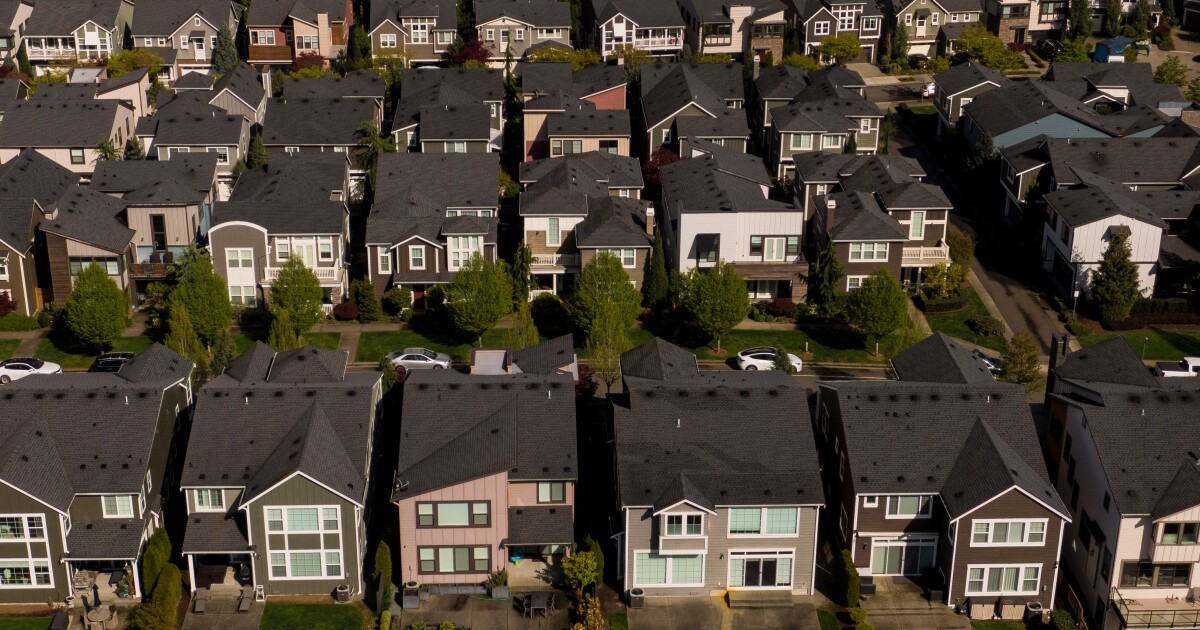
Existing-home sales in the US barely rose in November, as a recent moderation in price growth and mortgage rates motivated buyers at the margin.
Contract closings ticked up 0.5% to an annual rate of 4.13 million last month, according to National Association of Realtor figures released Friday. That was the highest since February but down 7% from a year ago on an unadjusted basis.
READ MORE:
Meantime, the median sales price increased 1.2% from a year ago to $409,200. That was one of the weakest gains since mid-2023.
"Existing-home sales increased for the third straight month due to lower mortgage rates this autumn," NAR Chief Economist Lawrence Yun said in a statement. "However, inventory growth is beginning to stall."
In November, the supply of previously owned homes on the market fell from the previous month to 1.43 million, roughly flat in recent months. Yun said that's because sellers aren't desperate and are choosing to de-list and try again in the popular spring-selling season instead. At the current sales pace, inventory is equivalent to 4.2 months' supply, the weakest since March.
READ MORE:
The improving sales suggest the home resale market is gradually ticking up, which many analysts see continuing into 2026. Prices are growing at a slower pace, even declining in some cities, while mortgage rates have stabilized in the 6.3% to 6.4% range, down from near 7% in May.
Realtor.com sees prices rising 2.2% next year, which likely will trail the overall rate of inflation, the company said in its 2026 housing forecast. But the sector's rebound will be slow, and for now, many sellers are yanking their properties off the market after failing to fetch their asking price.
NAR sees sales rising 14% next year, higher than most other forecasts but a figure that Yun said he feels "confident" in. That assumes more inventory will come on the market, mortgage rates will hover around 6% and the Federal Reserve will cut interest rates another two times, compared to policymakers' median projection for one.
Achieving such an optimistic target will likely prove difficult as consumer sentiment remains depressed. A gauge from the University of Michigan rose in December by
READ MORE:
Sales rose in the Northeast and South, the nation's biggest home-selling region. The pace of closings in those two regions were the highest since early this year. Activity was flat in the West and declined in the Midwest.
Last month, first-time buyers accounted for 30% of closings, compared with 32% in October. Individual investors or second-home buyers bought 18% of homes, compared with 16% the previous month.