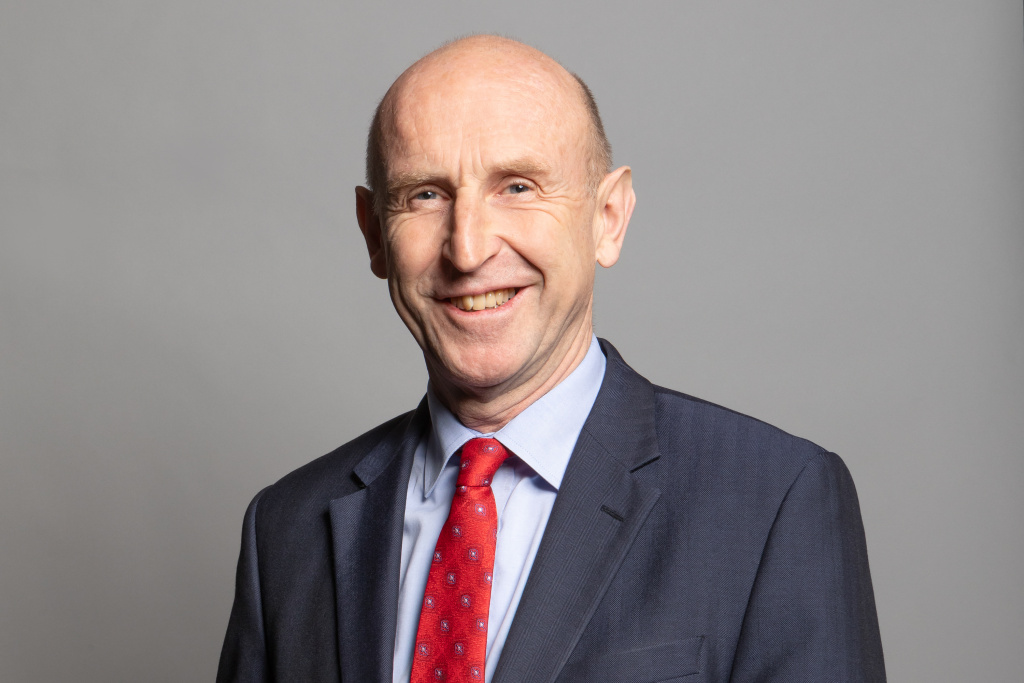
The Prime Minister has appointed former defence secretary John Healey as chancellor in his new cabinet.
In the run-up to Andy Burnham taking government, former Labour leader Ed Miliband had been widely-tipped for the Treasury role.
However, in recent days home secretary Shabana Mahmood emerged as a front-runner.
But in the end, Miliband was appointed as foreign secretary and Mahmood remained at the Home Office.
Angela Rayner has returned to her former role as housing secretary after resigning last year over tax controversy.
Healey immediately sought to calm markets with his first words as chancellor.
Speaking to broadcasters this morning, he said: “Fiscal control is the first duty of any chancellor – it is mine.
“And fiscal credibility is the bedrock of economic stability and national security.”
But some are sceptical about Healey’s reassurances.
DeVere Group chief executive Nigel Green says: “A week of calm markets was built on the expectation of restraint at the Treasury.
“What arrived instead is a chancellor with a spending record and a mandate, by Downing Street’s own description, to execute rather than temper the Prime Minister’s plans.”
He says that when Healey resigned from cabinet last month he was seeking more money for defence and pushed for spending to reach 3% of GDP by 2030.
“He now runs a Treasury under a Prime Minister who has ruled out raising income tax, VAT and National Insurance.
“That spending has to be funded somewhere, and wealth, capital gains and property are the obvious remaining options.”
Green adds that the recent market rally was built on the assumption that a fiscally-cautious figure would “sit between Burnham and his own instincts on tax”, but that “this theory no longer holds”.